Hongdae, Yeonnam-dong, and Sinchon are three closely connected neighborhoods in western Seoul.
This part of the city is very different from the historic center around Jongno. Instead of palaces and traditional architecture, you will find university streets, independent shops, cafés, restaurants, music, art, nightlife, and residential alleys.
The three areas can be visited separately, but understanding how they connect makes it much easier to explore western Seoul.
Hongdae: Music, Shopping & Seoul’s Youth Culture
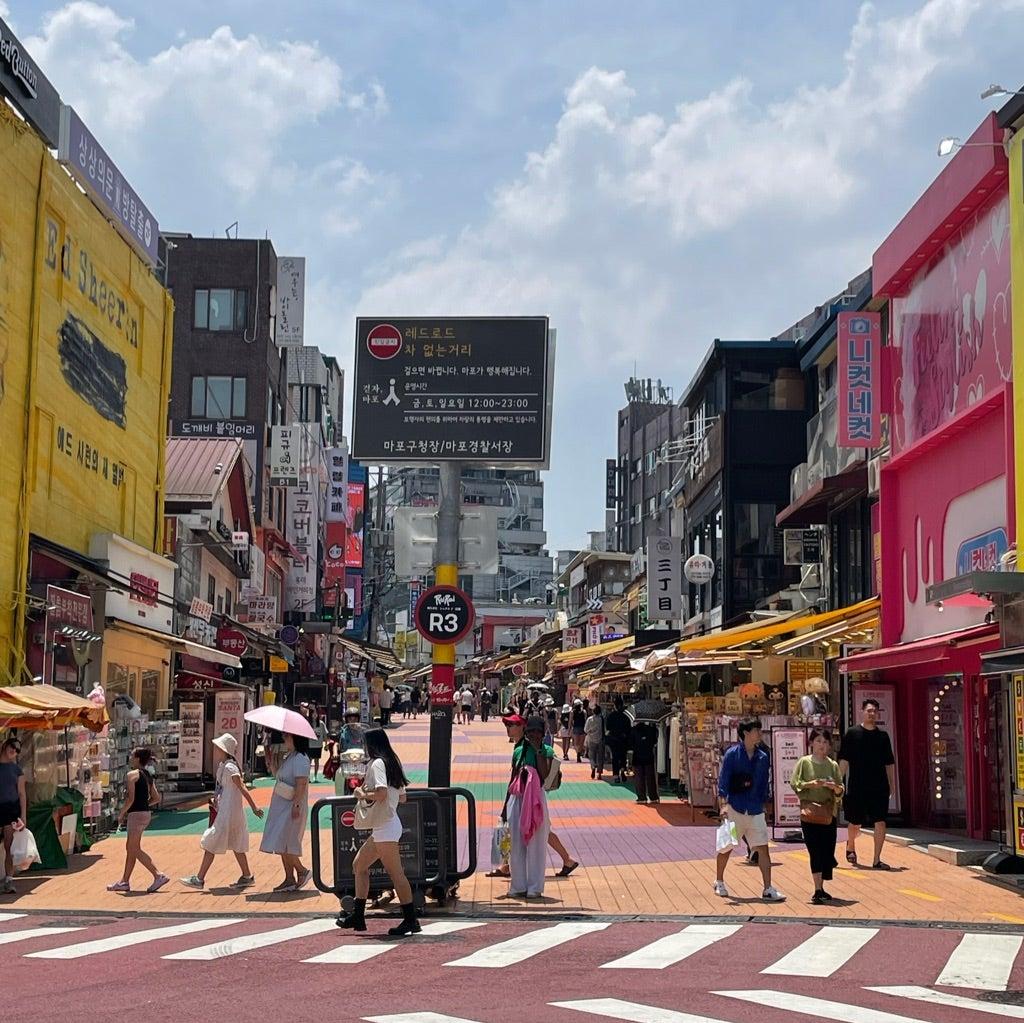
Hongdae is the busiest and most internationally recognizable area of the three.
The neighborhood developed around Hongik University and became closely associated with music, art, design, fashion, and independent cultural activity.
Today, visitors can find:
- Street performances and busking
- Fashion and lifestyle shops
- Cafés and restaurants
- Small galleries and creative spaces
- Music venues
- Nightlife
- Busy pedestrian streets and smaller side alleys
The atmosphere changes throughout the day.
During the afternoon, Hongdae works well for shopping, cafés, food, and exploring side streets. In the evening, the streets become much livelier as restaurants, bars, music venues, and entertainment spaces become busier.
If you want to experience a more energetic and contemporary side of Seoul, Hongdae is one of the easiest places to start.
Yeonnam-dong: Forest Park, Cafés & Small Streets
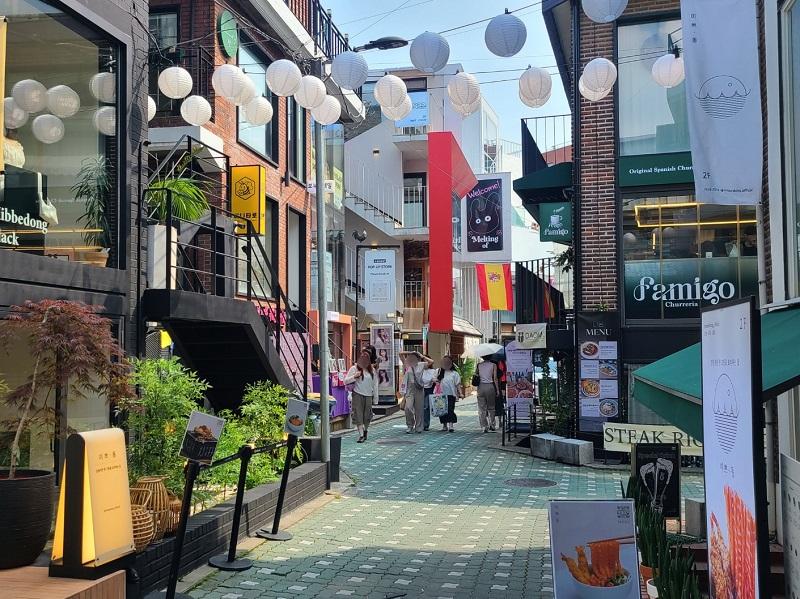
Just north of Hongdae is Yeonnam-dong, which has a more relaxed atmosphere.
Its main feature is the Yeonnam-dong section of Gyeongui Line Forest Park, a long linear park created along the former railway line.
The park stretches much farther beyond Yeonnam-dong, but this section is especially useful for travelers because it connects directly with the Hongik University Station area.
Around the park and nearby residential streets, you will find:
- Cafés
- Restaurants
- Small shops
- Boutiques
- Creative businesses
- Quiet residential alleys
Yeonnam-dong is therefore a good place to slow down after spending time in busy Hongdae.
You can walk through the park, explore the surrounding alleys, stop at a café, or simply see how a residential neighborhood has developed into a popular local destination.
Gyeongui Line Forest Park
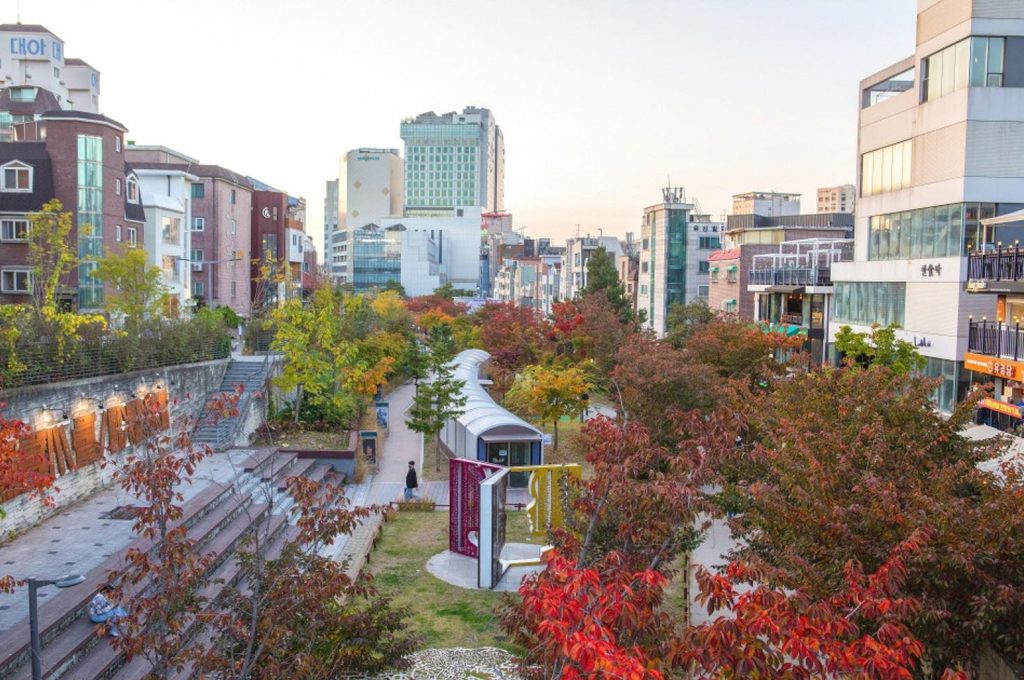
The Gyeongui Line Forest Park is one of the most useful landmarks for understanding this part of Seoul.
The entire park is about 6.3 km long, but travelers do not need to walk the whole route. The Yeonnam-dong section is the most convenient starting point for visitors exploring Hongdae and Yeonnam-dong.
The park provides a natural connection between several neighborhoods and creates an easy walking route away from the busiest commercial streets.
For a first visit, the area around Hongik University Station Exit 3 is particularly convenient. The park and Yeonnam-dong streets begin close to the station.
Sinchon: University Streets & Everyday Seoul
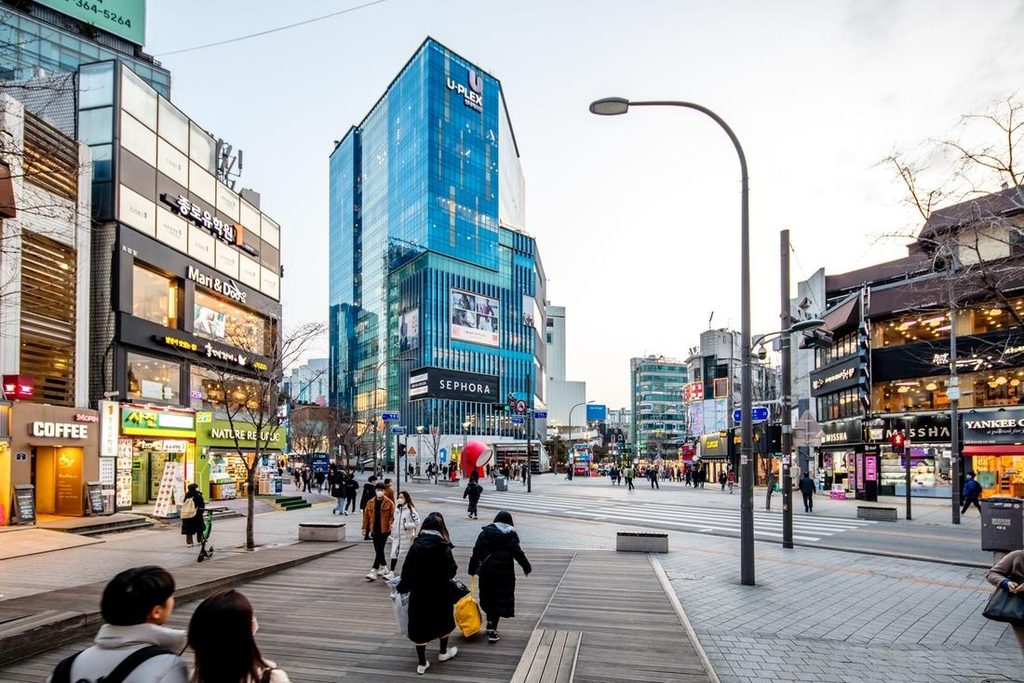
Sinchon lies southwest of Hongdae and is another major university neighborhood.
The area is centered around several universities and has a long-established student atmosphere.
Compared with Hongdae, Sinchon can feel more like an everyday commercial district. Its streets are filled with:
- Restaurants
- Cafés
- Shops
- Casual entertainment
- Student-oriented businesses
- Busy pedestrian areas
For travelers, Sinchon is useful when you want to see a part of Seoul that feels less focused on sightseeing and more connected to everyday city life.
It is also easy to combine with Hongdae because the two areas are relatively close.
How Hongdae, Yeonnam-dong & Sinchon Connect
These neighborhoods are best understood as one connected area rather than three completely separate destinations.
A simple way to picture them is:
Sinchon → Hongdae → Yeonnam-dong
Hongdae sits in the middle of this group.
- Sinchon — university district and everyday city atmosphere
- Hongdae — music, shopping, food, culture, and nightlife
- Yeonnam-dong — cafés, small streets, restaurants, and green space
The connection is especially useful for travelers because you can change the atmosphere simply by walking a short distance.
You might start around Sinchon, continue toward Hongdae for shopping and food, and then finish around Yeonnam-dong and the forest park.
There is no need to follow a fixed route. Choose the parts that match your interests.
What Is This Area Best For?
For First-Time Visitors
Hongdae is one of the easier places to experience modern Seoul without needing a detailed plan.
You can simply walk around, eat, shop, visit cafés, and observe the local atmosphere.
For Cafés & Food
Yeonnam-dong is particularly useful for travelers who enjoy exploring restaurants and cafés along smaller streets rather than staying on major commercial roads. Official Seoul tourism information also highlights the concentration of restaurants and cafés around the Yeonnam-dong forest park.
For Nightlife
Hongdae becomes much more active in the evening, with restaurants, bars, music venues, and entertainment concentrated around the main streets and nearby alleys.
For Walking
The Gyeongui Line Forest Park provides an easy green walking route through Yeonnam-dong.
It is especially useful when you want a break from Seoul’s busy commercial streets.
For Seeing Contemporary Seoul
If Jongno shows palaces, historic streets, and traditional Seoul, this area provides a different picture:
music, youth culture, cafés, creative businesses, universities, shopping, and everyday neighborhoods.
How Much Time Do You Need?
You can visit one area in a couple of hours, but combining all three gives you a better understanding of western Seoul.
A flexible visit could include:
- Sinchon: 1–2 hours
- Hongdae: 2–3 hours
- Yeonnam-dong: 1–2 hours
You do not need to visit everything.
If you have limited time, choose Hongdae + Yeonnam-dong.
If you want to explore more of the neighborhood and see a university district, add Sinchon.
Getting There
The easiest transportation hub for this area is Hongik University Station.
The station connects:
- Subway Line 2
- Gyeongui-Jungang Line
- Airport Railroad
Hongik University Station Exit 3 provides convenient access to the Yeonnam-dong section of Gyeongui Line Forest Park.
Sinchon also has its own subway station on Line 2, making it easy to approach the area from either direction.
Quick Guide
Best for:
Music, street culture, cafés, food, shopping, nightlife, walking, contemporary Seoul
Hongdae:
Music, shopping, entertainment, nightlife
Yeonnam-dong:
Cafés, restaurants, small streets, Gyeongui Line Forest Park
Sinchon:
University district, restaurants, shops, everyday Seoul
Main transportation hub:
Hongik University Station
Best time:
Afternoon to evening
Recommended time:
3–5 hours for a combined visit
Good combination:
Hongdae + Yeonnam-dong
Final Thoughts
Hongdae, Yeonnam-dong, and Sinchon are useful areas to explore when you want to understand a different side of Seoul.
Jongno introduces travelers to the city’s historic center. This part of western Seoul shows a more contemporary city shaped by universities, music, cafés, creative businesses, shopping, and local neighborhoods.
You do not need to see every street.
Start with the area that interests you most, then move outward as you discover more.