Bulguksa Temple and Seokguram Grotto are two of the most important cultural heritage sites in Gyeongju, South Korea. Located on the slopes of Tohamsan Mountain, they offer a closer look at the Buddhist art, architecture, and spiritual traditions of the ancient Silla Kingdom.
Both sites are recognized together as a UNESCO World Heritage Site. Bulguksa is known for its stone bridges, pagodas, and traditional temple buildings, while Seokguram is famous for its carefully designed stone grotto and seated Buddha statue.
Visiting both places in one trip is one of the best ways to explore Gyeongju beyond its historic downtown.
1. Bulguksa Temple
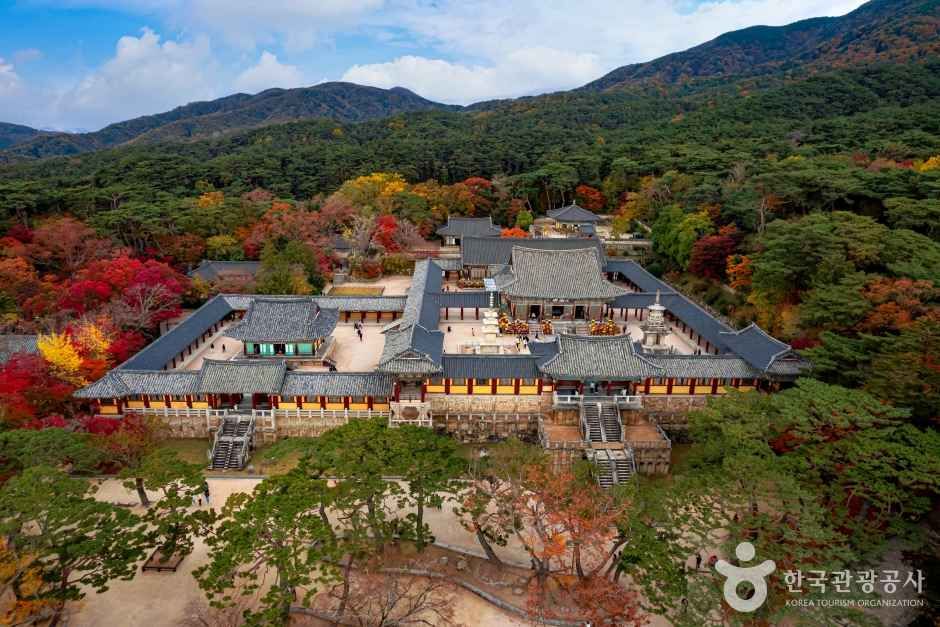
Bulguksa Temple is one of Korea’s most celebrated Buddhist temples. Construction began during the Silla Kingdom in the 8th century, and the complex was developed to represent an ideal Buddhist world.
The temple is especially famous for its stone architecture and harmonious arrangement of courtyards, stairs, bridges, and wooden halls.
What to See at Bulguksa
- Dabotap Pagoda: An elaborate stone pagoda known for its detailed design.
- Seokgatap Pagoda: A simpler three-story stone pagoda standing in contrast to Dabotap.
- Cheongungyo and Baegungyo Bridges: Historic stone stairways leading toward the temple’s main courtyard.
- Daeungjeon Hall: The main worship hall and an important part of the temple complex.
- Temple Courtyards: Quiet spaces where visitors can appreciate traditional Korean Buddhist architecture.
Allow around 1–1.5 hours to explore the main temple grounds. Take time to notice the stone details and the contrast between the wooden buildings and granite structures.
2. Seokguram Grotto
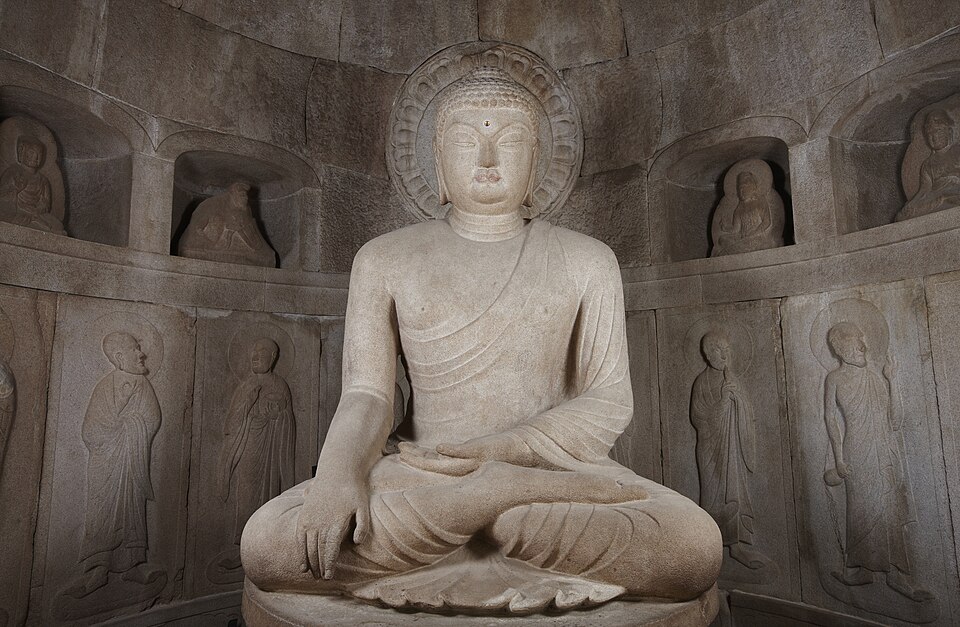

Seokguram Grotto is an artificial stone sanctuary located higher up on Tohamsan Mountain. It was built during the 8th century under the Silla Kingdom and is considered one of the finest achievements of ancient Korean Buddhist art.
The grotto contains a monumental seated Buddha carved from granite. The surrounding sculptures and carefully arranged stone structure reflect the artistic and engineering skills of the Silla period.
Unlike a typical cave, Seokguram was carefully designed as a Buddhist sanctuary. Its central Buddha statue is the main highlight of the visit.
What to See at Seokguram
- Seated Buddha Statue: The central sculpture and the most important feature of the grotto.
- Stone Bodhisattva and Guardian Figures: Sculptures surrounding the central Buddha.
- Grotto Architecture: The carefully constructed stone dome and interior layout.
- Mountain Scenery: The surrounding forest and views from the mountain area.
Visitors generally view the Buddha through a protective glass barrier. Photography inside the grotto may be restricted, so follow the signs and staff instructions.
Allow around 30–45 minutes for the grotto visit, including the walk from the parking area.
How to Visit Both Sites in One Day
Bulguksa Temple and Seokguram Grotto are close enough to visit on the same day, but they are not next to each other. Seokguram is located higher on the mountain, approximately 9 km from Bulguksa by road.
A practical visiting order is:
- Start at Bulguksa Temple and explore the main temple grounds.
- Travel uphill to Seokguram Grotto by local bus, taxi, or car.
- Visit the grotto and allow time for the walk from the parking area.
- Return to Bulguksa or continue to another destination in Gyeongju.
Allow approximately 3–4 hours for both sites, including transportation. Add more time if you plan to walk along the mountain trail.
How to Get to Bulguksa Temple and Seokguram Grotto
From Gyeongju Express and Intercity Bus Terminals
Take a local bus toward Bulguksa Temple. Buses 10 and 11 are commonly used for this route. Get off at the Bulguksa bus stop and follow the signs to the temple entrance.
From Singyeongju Station (KTX)
Take a bus or taxi toward central Gyeongju or the bus terminal area, then transfer to a local bus for Bulguksa. Direct bus services may be available depending on the timetable.
From Bulguksa to Seokguram Grotto
Local bus 12 connects the Bulguksa area with Seokguram’s mountain parking area. Services are limited compared with central city routes, so check the departure times before leaving the temple.
A taxi or rental car is a convenient alternative, especially if you are visiting both sites on a tight schedule.
Travel Tip: Seokguram is located on a mountain. Even when using the bus or a taxi, visitors need to walk from the parking area to the grotto. Wear comfortable shoes.
Food and Places to Eat Nearby
The Bulguksa area has restaurants and cafés where visitors can take a break after exploring the temple.
Some local dishes to look for include:
- Ssambap: Rice and various side dishes served with fresh leafy vegetables for wrapping.
- Korean Set Meals: Rice, soup, and several traditional side dishes.
- Grilled Fish: A popular option at Korean local restaurants.
- Traditional Tea and Desserts: A relaxing choice at cafés around the temple area.
Restaurant opening hours and menus vary, so check locally before visiting.
How Much Time Do You Need?
| Visit Plan | Recommended Time |
|---|---|
| Bulguksa Temple only | 1–1.5 hours |
| Seokguram Grotto only | 30–45 minutes |
| Both sites | 3–4 hours |
| Both sites with a mountain walk | Half a day or more |
If you have limited time in Gyeongju, visiting both sites together makes an efficient half-day cultural itinerary.
Why Visit Bulguksa Temple and Seokguram Grotto?
Bulguksa Temple and Seokguram Grotto reveal two different sides of Silla Buddhist culture. Bulguksa demonstrates the beauty of temple architecture and stone craftsmanship, while Seokguram showcases the artistic achievement of an ancient Buddhist sanctuary.
For travelers interested in Korean history, architecture, religion, or UNESCO heritage, these two sites are essential stops in Gyeongju.