Gwanghwamun and Gyeongbokgung form one of the most important historic areas in central Seoul.
The area connects Gwanghwamun Square, Gyeongbokgung Palace, museums, traditional streets, government buildings, and nearby neighborhoods. It is one of the best places to understand Seoul’s royal history while still experiencing the modern city.
Gwanghwamun at a Glance
| Area | What to See |
|---|---|
| Gwanghwamun Square | Major public square and city landmark |
| Gwanghwamun Gate | Main entrance to Gyeongbokgung |
| Gyeongbokgung Palace | Joseon royal palace |
| National Palace Museum | Royal artifacts and palace history |
| National Folk Museum | Korean traditional life and culture |
| Seochon | Traditional neighborhood west of the palace |
| Samcheong-dong | Galleries, cafés, shops, and traditional streets |
| Bukchon | Hanok neighborhood north of the palace |
Gwanghwamun Square
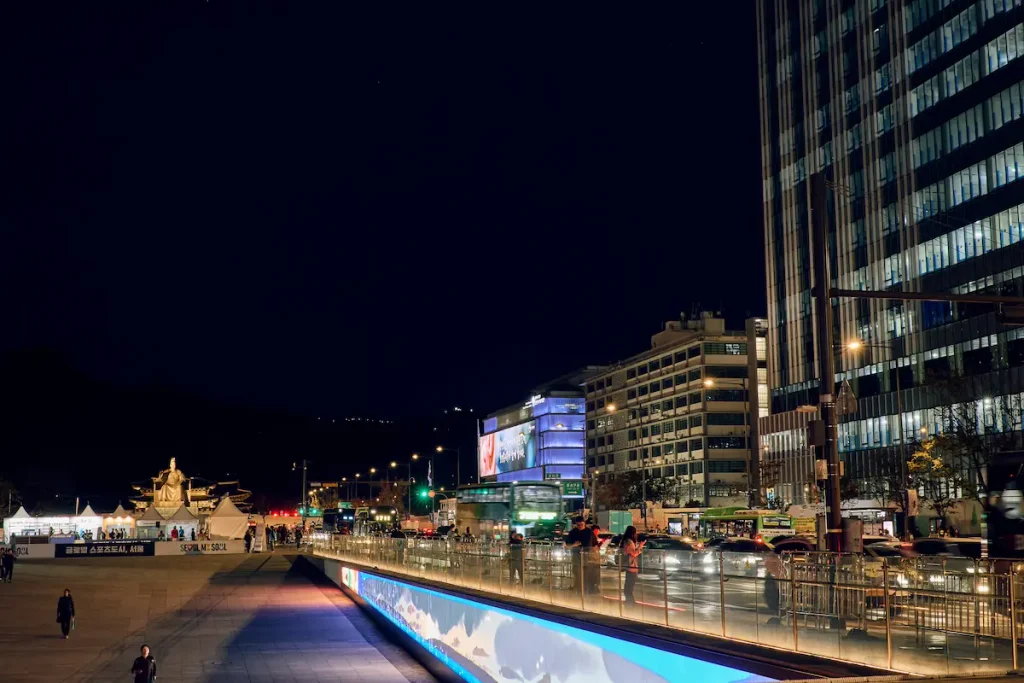
Gwanghwamun Square stretches between central Seoul and the main gate of Gyeongbokgung Palace.
It is more than a sightseeing spot. The square is surrounded by major government buildings, cultural attractions, restaurants, and pedestrian spaces.
From here, Gwanghwamun Gate provides a direct view toward Gyeongbokgung.
Gyeongbokgung Palace
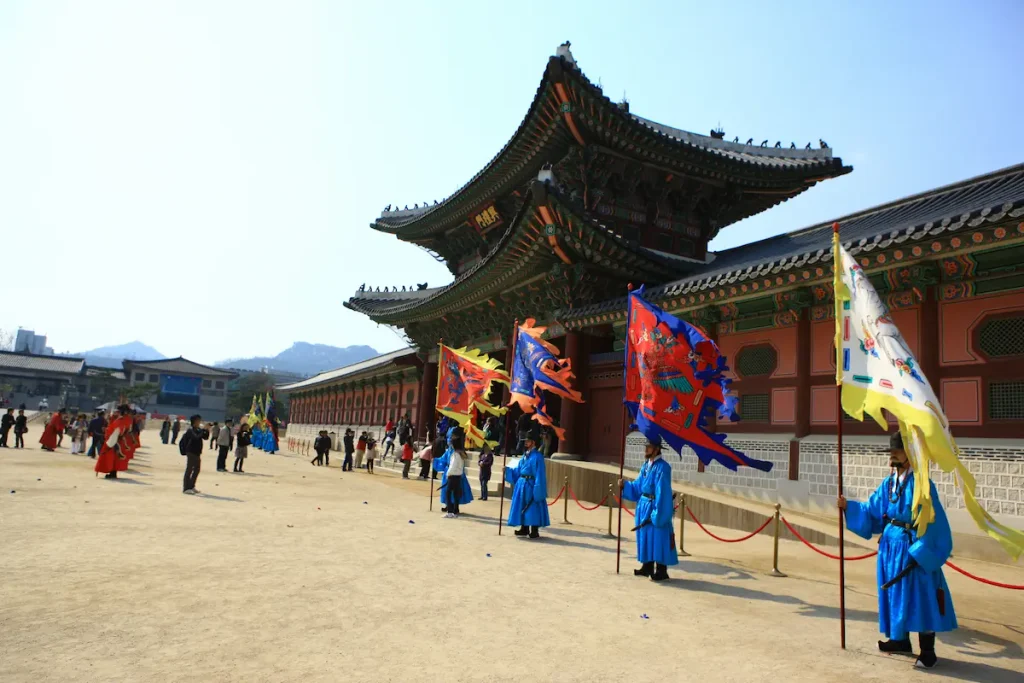
Gyeongbokgung was the main royal palace of the Joseon Dynasty.
The palace complex includes large courtyards, royal buildings, gates, gardens, and historical structures.
It is the main attraction in this area and connects naturally with the National Palace Museum and nearby traditional neighborhoods.
Useful nearby topics:
- Gyeongbokgung Palace Guide
- What to Know Before Visiting Gyeongbokgung
- Bukchon Hanok Village Guide
- Seochon Travel Guide
Museums Around the Palace
Several museums are located close to Gyeongbokgung.
National Palace Museum of Korea focuses on royal culture and artifacts from the Joseon Dynasty and Korean Empire.
National Folk Museum of Korea introduces traditional Korean life, customs, and culture.
These museums are useful if you want more context before or after visiting the palace.
Seochon
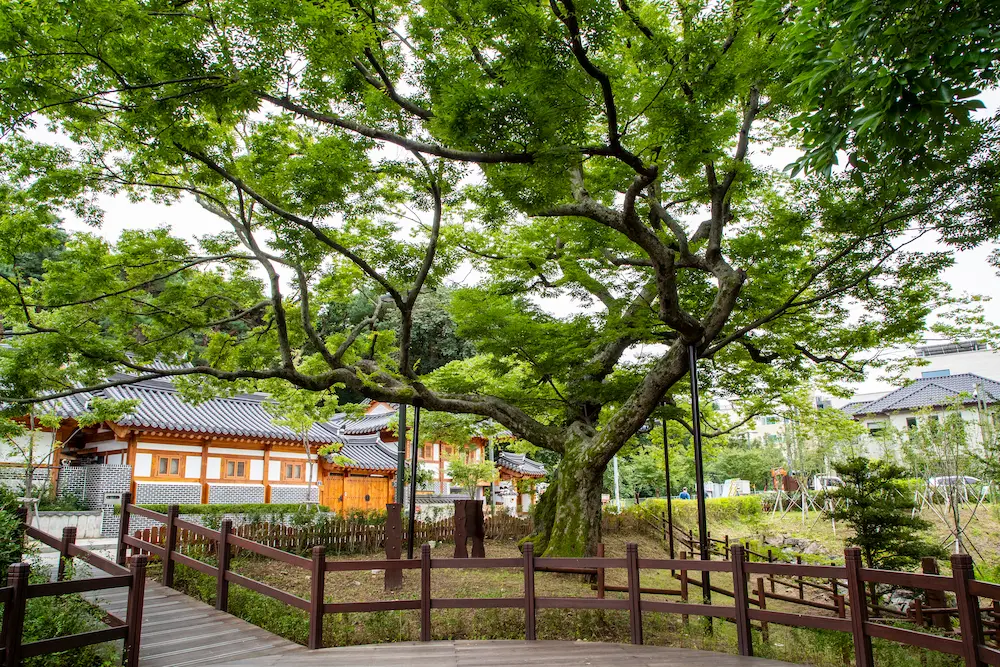
Seochon is located west of Gyeongbokgung.
Compared with the more famous Bukchon area, Seochon has a more neighborhood-oriented atmosphere, with traditional houses, small restaurants, cafés, galleries, and local shops.
It is a useful area to explore if you want to see how historic Seoul and everyday Seoul overlap.
Samcheong-dong and Bukchon
North of Gyeongbokgung, the streets gradually connect with Samcheong-dong and Bukchon.
Samcheong-dong is known for galleries, cafés, restaurants, and shops.
Bukchon is known for its traditional hanok houses and narrow residential streets.
These areas can be explored separately, but they are geographically connected to the Gwanghwamun and Gyeongbokgung area.
How the Area Connects
The area can be understood as a simple chain:
Gwanghwamun Square → Gwanghwamun Gate → Gyeongbokgung → Bukchon / Samcheong-dong
To the west:
Gyeongbokgung → Seochon
This makes the area useful as a starting point for exploring several different sides of historic Seoul.
What Is This Area Best For?
Choose Gwanghwamun and Gyeongbokgung if you are interested in:
- Joseon history
- Royal palaces
- Traditional Korean architecture
- Museums
- Historic neighborhoods
- Walking through central Seoul
- Connecting several nearby areas
Quick Guide
Best for: History, culture, architecture, museums, walking
Main attractions: Gwanghwamun Square, Gwanghwamun Gate, Gyeongbokgung
Nearby areas: Seochon, Bukchon, Samcheong-dong, Insadong
Good to combine with: Jongno, Bukchon, Insadong, Seochon
Time needed: Several hours for the main area; longer if you explore the surrounding neighborhoods
Final Thoughts
Gwanghwamun and Gyeongbokgung are not simply two famous Seoul attractions.
They form a central area where royal history, museums, traditional neighborhoods, and modern Seoul meet.
Understanding this area makes it easier to explore the surrounding parts of Jongno and build your own Seoul travel plan.