Jongno-gu travel guide: Discover the historic heart of Seoul, where royal palaces, traditional hanok streets, and cultural landmarks sit alongside lively local neighborhoods. Explore areas such as Gwanghwamun, Insadong, and Ikseon-dong, and experience a mix of Korean history, food, and everyday city life. This guide introduces the district’s main attractions and practical tips for planning your visit.
Jongno-gu at a Glance
| Area | What It Is Known For |
|---|---|
| Gwanghwamun | Palaces, government buildings, museums, public spaces |
| Gyeongbokgung | Joseon royal palace and traditional architecture |
| Bukchon | Hanok houses, historic streets, traditional culture |
| Samcheong-dong | Galleries, cafés, design shops, quieter streets |
| Insadong | Traditional crafts, galleries, tea houses, souvenirs |
| Ikseon-dong | Hanok cafés, restaurants, small shops |
| Jongmyo & Jongno 3-ga | Royal heritage, traditional streets, local food |
| Gwangjang Market | Korean food, traditional market atmosphere |
| Daehangno | Theater, performing arts, cafés, university-area culture |
| Cheonggyecheon | Urban stream, walking, central Seoul scenery |
1. Gwanghwamun: The Main Gateway to Historic Seoul
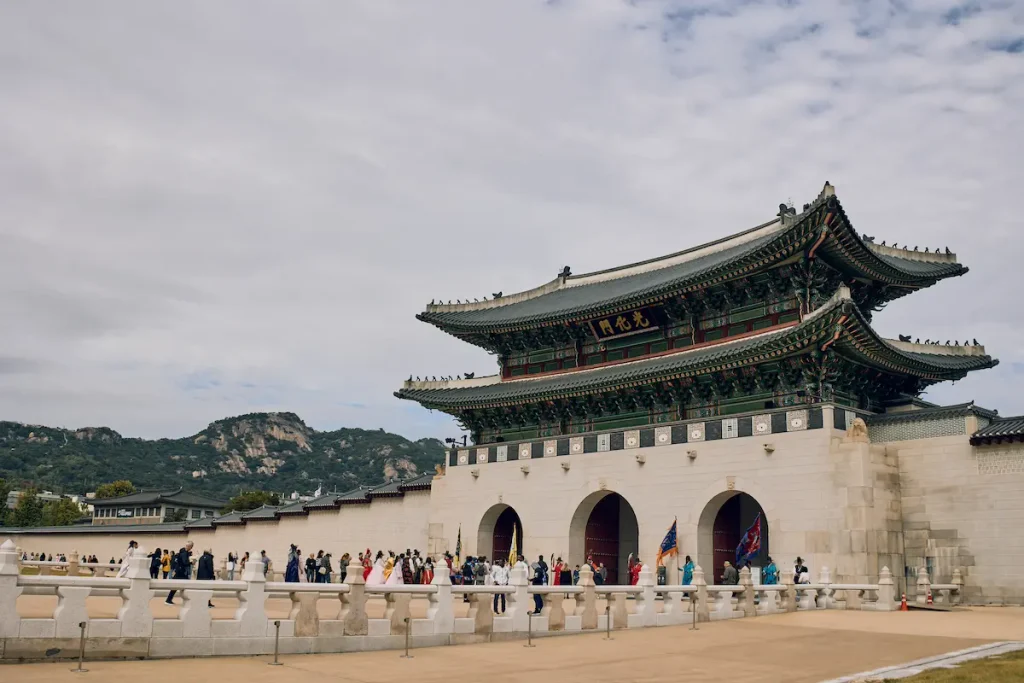
Gwanghwamun is one of the most recognizable areas in central Seoul.
Gwanghwamun Gate marks the southern entrance to Gyeongbokgung Palace, while Gwanghwamun Square stretches south toward the modern city center.
The area brings together historic architecture, museums, government buildings, public spaces, and modern commercial districts.
For first-time visitors, Gwanghwamun is a useful starting point for exploring Jongno because several major attractions are located within a relatively compact area.
What to explore
- Gwanghwamun Gate
- Gwanghwamun Square
- Gyeongbokgung Palace
- National Palace Museum of Korea
- National Folk Museum of Korea
- Museums and cultural spaces nearby
Gwanghwamun also demonstrates one of the defining characteristics of Seoul: historic landmarks and modern city life existing side by side.
2. Gyeongbokgung: Seoul’s Main Royal Palace
Gyeongbokgung Palace is the largest of Seoul’s Five Grand Palaces and was built in 1395 as the main palace of the Joseon Dynasty.
The palace complex contains large courtyards, royal buildings, gates, gardens, and restored historic structures.
For travelers interested in Korean history and traditional architecture, it is one of the most important places to understand in Jongno.
The palace is also connected to several nearby attractions, including the National Folk Museum of Korea and the National Palace Museum of Korea.
Practical information
Gyeongbokgung is normally closed on Tuesdays. Opening hours change by season, and the last admission is one hour before closing. As of 2026, the foreign adult admission fee is KRW 3,000.
Visitors wearing a complete hanbok may qualify for free admission under the applicable rules.
Related HAEORI guide:
Gyeongbokgung Palace Guide for First-Time Visitors
3. Bukchon: Traditional Seoul Between the Palaces
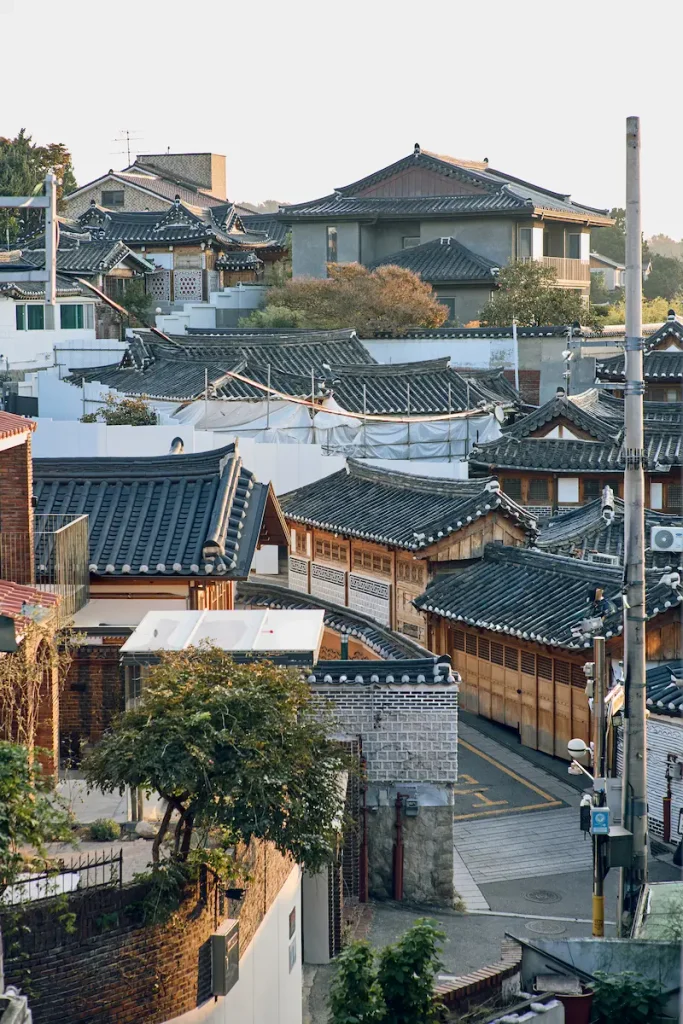
Bukchon Hanok Village is located between Gyeongbokgung Palace and Changdeokgung Palace.
The neighborhood is known for its traditional Korean houses, narrow streets, small cultural businesses, and views across the historic center of Seoul.
Bukchon is not simply an open-air museum. It is also a residential neighborhood, so visitors should treat the area as a living community rather than a conventional tourist attraction.
The best way to understand Bukchon is to explore its streets slowly and pay attention to the relationship between the traditional houses and the surrounding modern city.
What to explore
- Hanok streets
- Traditional architecture
- Small galleries and craft shops
- Cultural experiences
- Views toward central Seoul
Because Bukchon is a residential area, visitor restrictions can apply in certain sections. Check the latest local rules before visiting.
Related HAEORI guide:
Bukchon Hanok Village Guide for First-Time Visitors
4. Samcheong-dong: Galleries, Cafés & Quiet Streets
Samcheong-dong sits near Gyeongbokgung and Bukchon and has a different atmosphere from the busier tourist streets.
The area is known for galleries, cafés, restaurants, design shops, and streets that combine traditional architecture with contemporary businesses.
It can be a useful area to explore when you want to move from the major palace attractions into a slower neighborhood environment.
Best for
- Cafés
- Galleries
- Design
- Small shops
- Walking
- A quieter side of central Seoul
Samcheong-dong also works naturally as a connection between Gyeongbokgung, Bukchon, and the northern parts of central Jongno.
5. Insadong: Traditional Crafts, Art & Tea Houses
Insadong is one of Jongno’s best-known traditional cultural districts.
The main streets and surrounding alleys contain traditional craft shops, galleries, tea houses, restaurants, and stores selling Korean-style souvenirs.
The main Insadong street is approximately 700 meters long and forms part of Jongno’s central cultural area.
The area is particularly useful for travelers looking for Korean crafts and traditional cultural products without leaving central Seoul.
What to explore
- Insadong-gil
- Ssamzie-gil
- Traditional craft shops
- Art galleries
- Tea houses
- Korean-style souvenirs
- Traditional food
Insadong is also connected to Jogyesa Temple and several smaller cultural sites, making the surrounding streets worth exploring rather than limiting your visit to the main road.
Related HAEORI guide:
Insadong Travel Guide for First-Time Visitors
6. Ikseon-dong: Hanok Streets with a Modern Feel
Ikseon-dong is one of the most interesting examples of how Seoul’s older neighborhoods have been adapted for contemporary life.
Traditional hanok buildings have been reused as cafés, restaurants, boutiques, and small businesses.
The result is different from Bukchon. Bukchon is primarily known for its residential hanok streets and historic setting, while Ikseon-dong is more focused on food, cafés, shopping, and contemporary experiences inside traditional architecture.
Best for
- Hanok cafés
- Restaurants
- Small shops
- Photography
- Evening atmosphere
- Contemporary Korean lifestyle
Ikseon-dong is particularly useful for travelers who want to see how traditional Korean architecture is being used in modern Seoul.
7. Jongmyo Shrine & Jongno 3-ga
East of the central palace area, Jongmyo Shrine provides another important connection to the history of the Joseon Dynasty.
Jongmyo is a Confucian royal shrine dedicated to the kings and queens of Joseon and their royal ancestors.
Nearby Jongno 3-ga has a very different atmosphere.
The streets around the area are known for traditional restaurants, older businesses, markets, and local nightlife.
This makes the area useful for travelers who want to move beyond Seoul’s polished tourist districts and experience an older side of central Seoul.
What to explore
- Jongmyo Shrine
- Traditional restaurants
- Older commercial streets
- Local markets
- Jongno 3-ga
- Nearby historic neighborhoods
8. Gwangjang Market: Food & Traditional Market Culture
Gwangjang Market is one of the most recognizable traditional markets in Seoul.
The market is especially well known for Korean street food and traditional dishes.
Food stalls and small restaurants provide an opportunity to see a more everyday side of Seoul’s food culture.
What to look for
- Bindaetteok
- Mayak gimbap
- Mandu
- Sundae
- Korean noodles
- Traditional market snacks
The market can be busy, particularly around popular food areas, so it is useful to explore beyond the first stalls you see.
Related HAEORI guide:
Seoul Markets and Food Streets Guide for First-Time Visitors
9. Cheonggyecheon: A Different View of Central Seoul
Cheonggyecheon is an urban stream running through central Seoul.
Within Jongno, it creates a very different environment from the surrounding streets of offices, shops, and busy roads.
The stream passes historic and modern parts of the city, providing walking areas and changing views of central Seoul.
The Jongno district describes Cheonggyecheon as a route where visitors can encounter historic palaces and Jongmyo alongside modern buildings.
Best for
- Walking
- Evening views
- Urban photography
- Short breaks during sightseeing
- Seeing historic and modern Seoul together
Cheonggyecheon is especially useful as a connecting feature rather than a destination that needs an entire day by itself.
10. Daehangno: Theater & Performing Arts
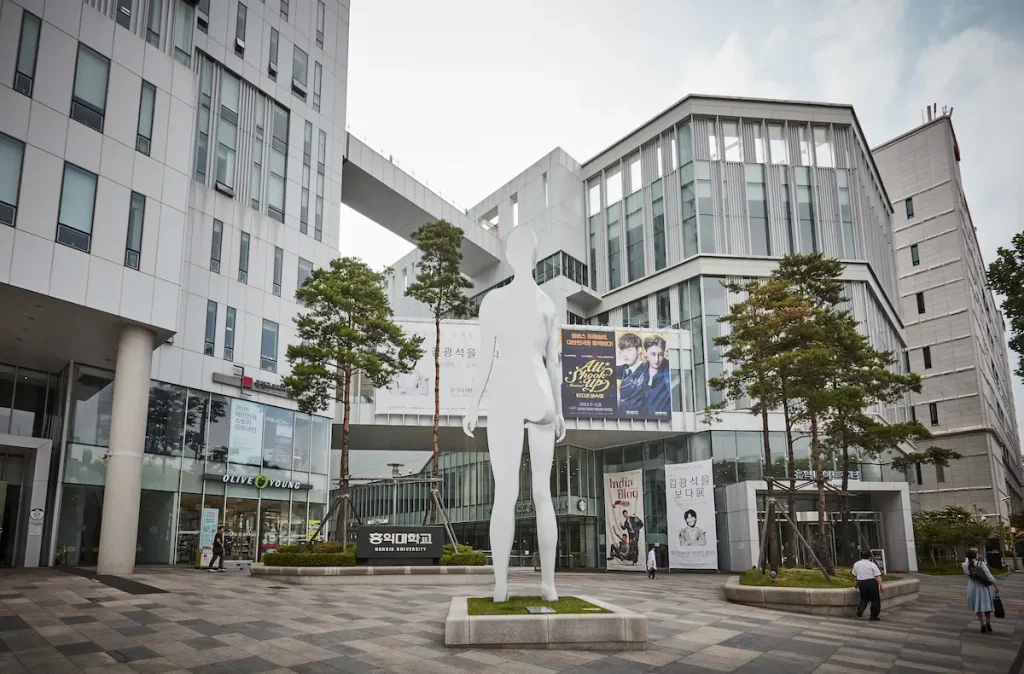
Daehangno is located in eastern Jongno and is particularly associated with theater and performing arts.
The area around Daehangno has theaters, cafés, restaurants, and university-area businesses.
It offers a different type of cultural experience from the historic attractions around Gyeongbokgung and Insadong.
Best for
- Theater
- Performing arts
- Cafés
- Restaurants
- Young local culture
- Evening activities
For travelers interested in Korean performing arts, Daehangno is an area worth researching separately.
How Jongno’s Areas Connect
One of the biggest advantages of exploring Jongno is that many of its major areas are relatively close to one another.
A traveler interested in Korean history can begin around Gwanghwamun and Gyeongbokgung, then continue toward Bukchon and Changdeokgung.
A traveler interested in traditional culture can explore Insadong, Jogyesa, Ikseon-dong, and nearby historic streets.
Someone more interested in food can look toward Gwangjang Market, Jongno 3-ga, and the surrounding local restaurant districts.
This means Jongno is better understood as a network of smaller areas rather than one single attraction.
What Kind of Traveler Will Enjoy Jongno?
History & Culture
Jongno is one of the strongest areas in Seoul for travelers interested in Korean history.
The concentration of royal palaces, shrines, traditional neighborhoods, museums, and cultural sites makes it an important part of understanding Seoul.
Traditional Korea
Bukchon, Insadong, traditional markets, temples, and hanok neighborhoods provide many different ways to experience traditional Korean culture.
Food
Jongno has everything from traditional market food to long-established local restaurants and newer cafés.
Architecture
The area provides an unusual mixture of royal architecture, hanok houses, historic streets, modern buildings, and contemporary commercial spaces.
Walking
Many attractions are close enough to connect naturally on foot, although Seoul’s hills and long distances between some areas mean that public transportation can still be useful.
Where to Go in Jongno Based on Your Interests
| Your interest | Areas to start with |
|---|---|
| Joseon history | Gyeongbokgung, Changdeokgung, Jongmyo |
| Traditional architecture | Bukchon, Ikseon-dong |
| Korean crafts | Insadong |
| Cafés | Samcheong-dong, Ikseon-dong |
| Korean food | Gwangjang Market, Jongno 3-ga |
| Museums | Gwanghwamun, Gyeongbokgung |
| Walking | Gwanghwamun, Cheonggyecheon, Bukchon |
| Performing arts | Daehangno |
| Traditional markets | Gwangjang Market |
| Modern use of historic spaces | Ikseon-dong, Insadong |
| Photography | Gwanghwamun, Bukchon, Samcheong-dong |
| Quiet neighborhood atmosphere | Samcheong-dong, parts of Bukchon |
How to Explore Jongno
There is no single correct way to explore Jongno.
Instead, choose an area based on what you want to learn about or experience.
If you are interested in Korean history, start with the palace area.
If you are interested in traditional culture, explore Bukchon and Insadong.
If you are interested in food, look toward Gwangjang Market and Jongno 3-ga.
If you are interested in cafés and contemporary culture, explore Samcheong-dong and Ikseon-dong.
If you are interested in performing arts, look toward Daehangno.
This approach gives you more flexibility than following a fixed sightseeing route.
Quick Guide
Best for history: Gyeongbokgung, Changdeokgung, Jongmyo
Best for traditional culture: Bukchon, Insadong
Best for Korean crafts: Insadong
Best for hanok cafés: Ikseon-dong
Best for market food: Gwangjang Market
Best for museums: Gwanghwamun and Gyeongbokgung
Best for walking: Gwanghwamun, Cheonggyecheon, Bukchon
Best for theater: Daehangno
Best for understanding historic Seoul: Gwanghwamun and the palace districts
Final Thoughts
Jongno is not simply a place to visit one famous palace.
It is one of the most information-rich parts of Seoul, where royal history, traditional neighborhoods, markets, temples, food, arts, and modern businesses exist within the same broad district.
For first-time visitors, understanding Jongno by its smaller areas makes the city much easier to explore.
Start with the part that matches your interests, then go deeper into individual places, foods, experiences, and practical information.
That is the best way to discover Jongno—and to understand why this part of Seoul remains so important to the city.