Gyeongju Historic Downtown is one of the best areas to explore Korea’s ancient Silla history, traditional architecture, and local food. Located in the heart of Gyeongju, this walkable area brings together royal tombs, historic landmarks, traditional houses, cafés, and restaurants.
For first-time visitors, Gyeongju Historic Downtown is a convenient starting point for discovering the city. Many major attractions are close enough to explore on foot, making it easy to enjoy several places in one day.
1. Hwangnidan-gil
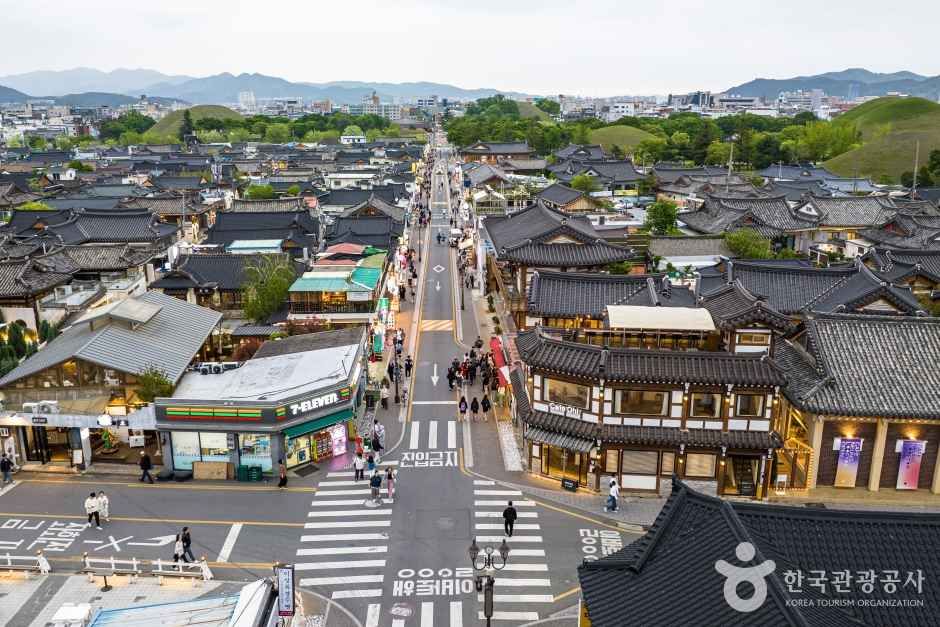
Hwangnidan-gil is a popular street lined with traditional-style buildings, independent shops, cafés, bakeries, and restaurants. Many businesses combine Korean architectural elements with modern interiors.
Visitors can enjoy local snacks, Korean desserts, coffee, and small shops selling souvenirs. The area is especially lively in the afternoon and evening.
Travel Tip: Weekends and public holidays can be crowded. Visit on a weekday or earlier in the day for a more relaxed experience.
2. Daereungwon Ancient Tomb Complex
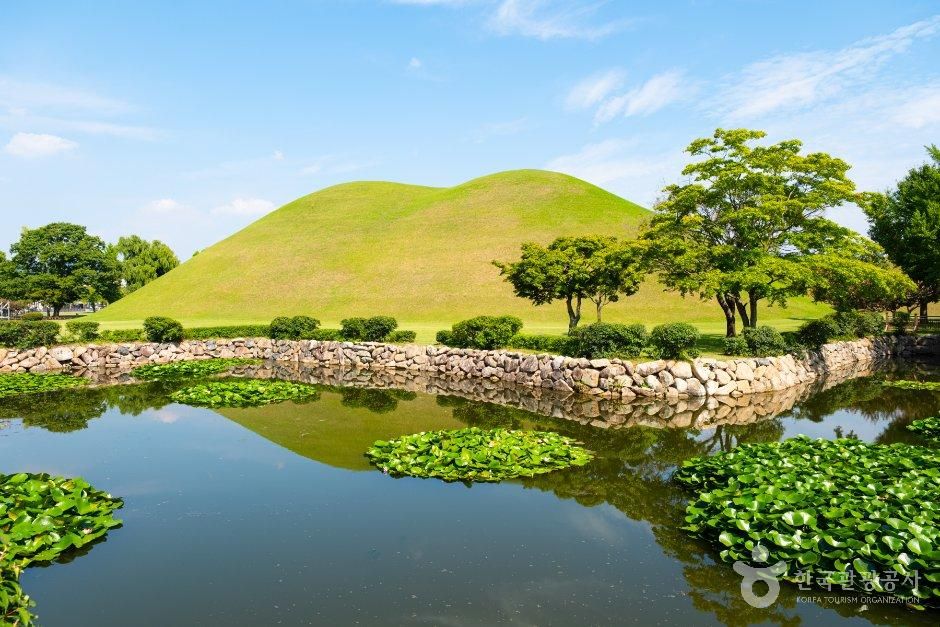
Daereungwon is a historic burial ground containing large grass-covered tombs from the Silla Kingdom. Its distinctive landscape offers a glimpse into the royal burial traditions of ancient Korea.
Visitors can walk along paths between the tombs and explore the surrounding historical landscape. Cheonmachong, one of the tombs within the complex, is open to visitors and displays artifacts and information about Silla burial culture.
Travel Tip: Allow time to walk around the grounds. The area is particularly attractive during spring and autumn.
3. Cheomseongdae Observatory
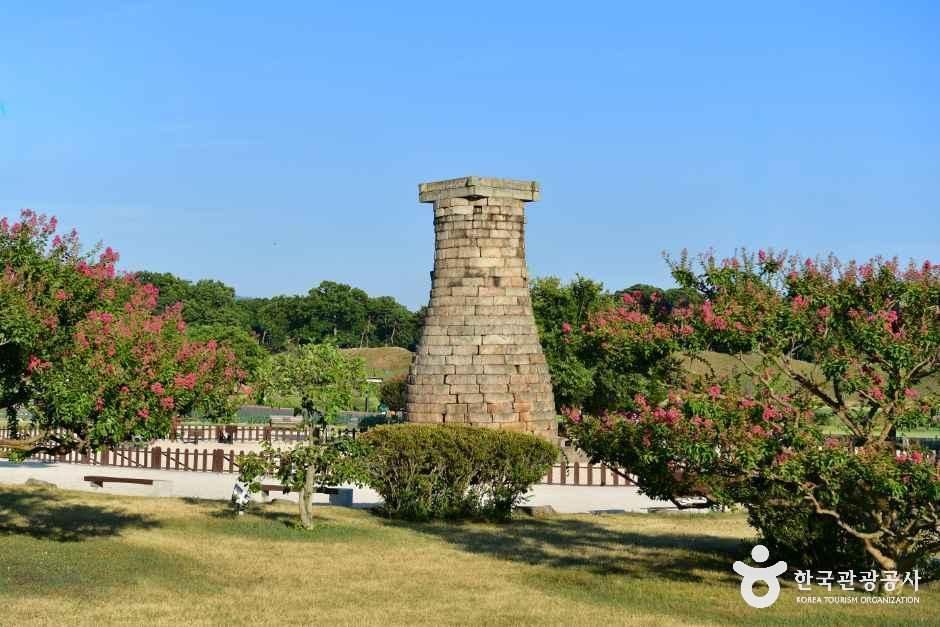
Cheomseongdae is an ancient astronomical observatory built during the Silla period. Its stone structure is one of Gyeongju’s best-known historical landmarks.
The observatory stands in an open landscape with walking paths and seasonal flowers. It is an easy stop when exploring Daereungwon and the surrounding historic district.
Travel Tip: Visit during daylight to see the stone structure clearly, or return in the evening to enjoy the illuminated surroundings when lighting is operating.
4. Gyerim Forest and Wolseong
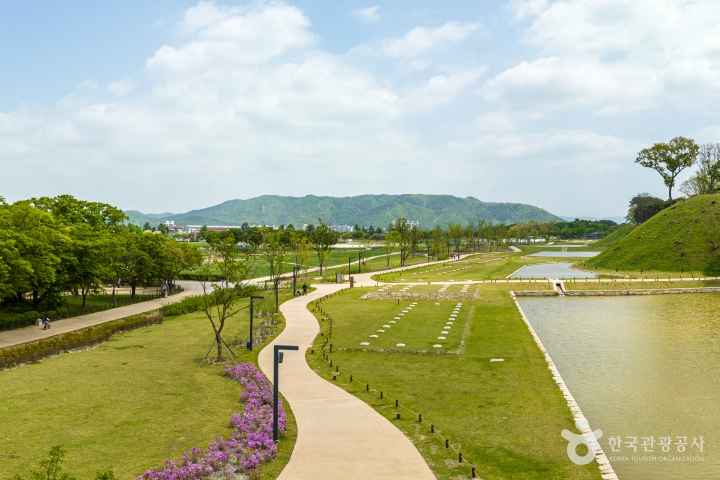
Gyerim is a small historic forest associated with the founding stories of the Silla royal family. Nearby Wolseong was the site of the ancient Silla royal palace.
Today, visitors can walk through the wooded area and explore the open archaeological landscape around the former palace site. These places provide a quieter contrast to the busy streets nearby.
Travel Tip: Combine Gyerim and Wolseong with Cheomseongdae for a convenient walking route.
5. Gyochon Traditional Village
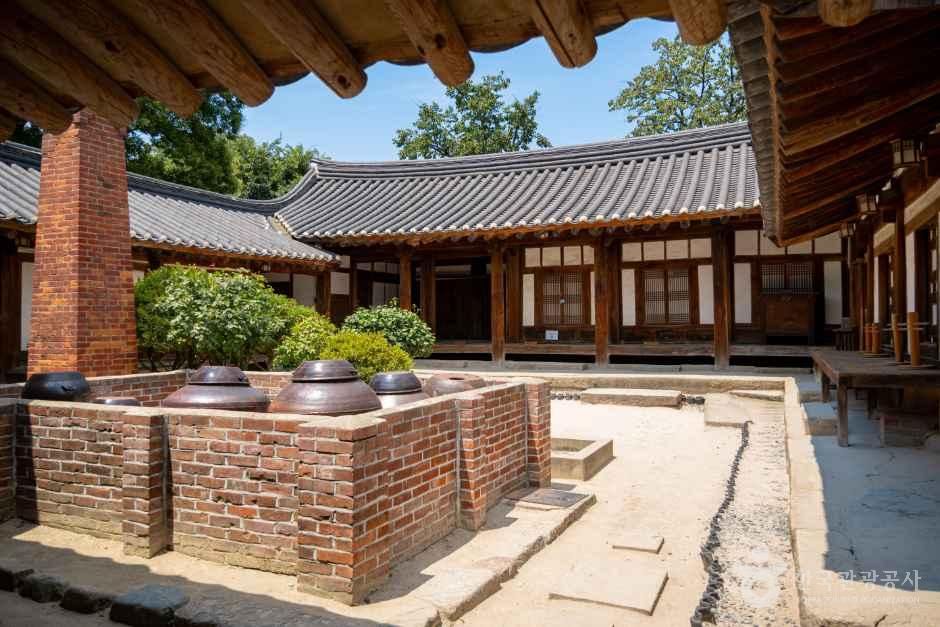
Gyochon Traditional Village preserves traditional Korean houses and offers a look at the lifestyle and architecture of the Gyeongju area.
Visitors can explore traditional buildings, stone walls, and quiet lanes. The village is also close to Woljeonggyo Bridge, making it easy to visit both places together.
Travel Tip: Walk respectfully through residential areas and follow visitor instructions around historic buildings.
6. Woljeonggyo Bridge
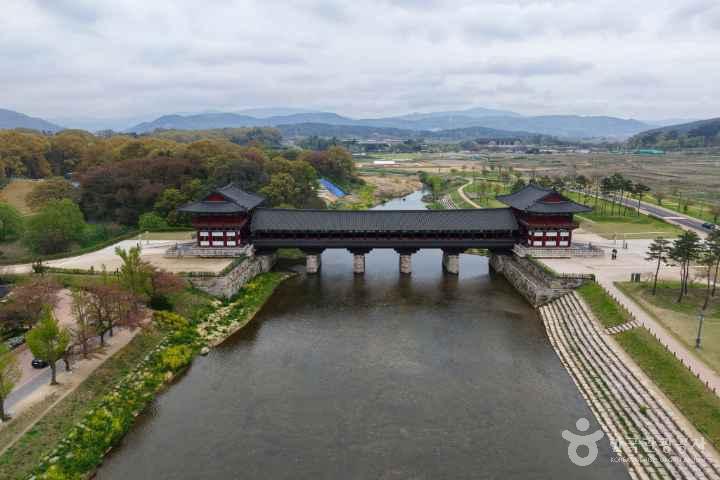
Woljeonggyo is a reconstructed historic bridge inspired by a bridge from the Silla period. Its traditional wooden architecture and riverside setting make it one of the most photogenic places in central Gyeongju.
The bridge is especially popular after sunset when its lights reflect on the water. It is within walking distance of Gyochon Traditional Village.
Travel Tip: Visit around sunset to see the bridge in both daylight and its evening lighting.
Food to Try in Gyeongju Historic Downtown
The historic downtown area has many restaurants, cafés, and snack shops. Visitors can try:
- Gyeongju bread: A small local pastry traditionally filled with red bean paste.
- Ssambap: Rice served with leafy vegetables, side dishes, and various accompaniments.
- Korean barbecue: Grilled meat served with rice and side dishes.
- Street snacks and desserts: A variety of sweet and savory snacks sold around Hwangnidan-gil.
Restaurant menus and prices vary, so check the menu before ordering. Some small restaurants may have minimum order requirements.
How to Get Around Gyeongju Historic Downtown
The historic downtown area is convenient to explore on foot. Hwangnidan-gil, Daereungwon, Cheomseongdae, Gyerim, Gyochon Traditional Village, and Woljeonggyo are connected by relatively short walking routes.
- From Gyeongju Express Bus Terminal: Walk or take a local taxi or bus toward the historic downtown area.
- From Gyeongju Station (KTX): Take a local bus or taxi toward central Gyeongju. The KTX station is outside the historic downtown area.
- By local bus: Buses connect central Gyeongju with other parts of the city. Check the route and destination before boarding.
- By taxi: Taxis are useful when traveling with luggage or visiting places outside the central walking area.
How Much Time Do You Need?
- 2–3 hours: Visit Hwangnidan-gil, Daereungwon, and Cheomseongdae.
- Half a day: Add Gyerim, Wolseong, and Gyochon Traditional Village.
- One full day: Explore the main attractions at a relaxed pace, enjoy local food, and visit Woljeonggyo in the evening.
Why Visit Gyeongju Historic Downtown?
Gyeongju Historic Downtown is an excellent place to experience the contrast between ancient Korean history and modern local culture. Visitors can explore Silla-era landmarks, walk through traditional streets, try regional food, and enjoy scenic evening views without traveling far between attractions.
For first-time visitors to Gyeongju, this area is a practical starting point for discovering the city’s historic character.
Before visiting, check current opening hours, admission conditions, and access information for individual attractions, as these may change.