The Seogwipo-si Travel Guide introduces the southern and eastern parts of Jeju Island, where dramatic waterfalls, volcanic coastlines, traditional markets, and scenic walking routes create some of the island’s most memorable travel experiences.
Located on Jeju’s southern side, Seogwipo-si includes coastal villages, rural areas, and popular attractions spread across a wide region. From the famous Seongsan Ilchulbong sunrise peak in the east to the volcanic cliffs of Jungmun and the coastal landscapes of Sanbangsan in the west, the city offers a variety of places to explore.
Because attractions are spread across different areas, planning your route in advance is important. This guide covers major destinations throughout Seogwipo-si, including its eastern and western areas.
1. Seongsan Ilchulbong (Sunrise Peak)
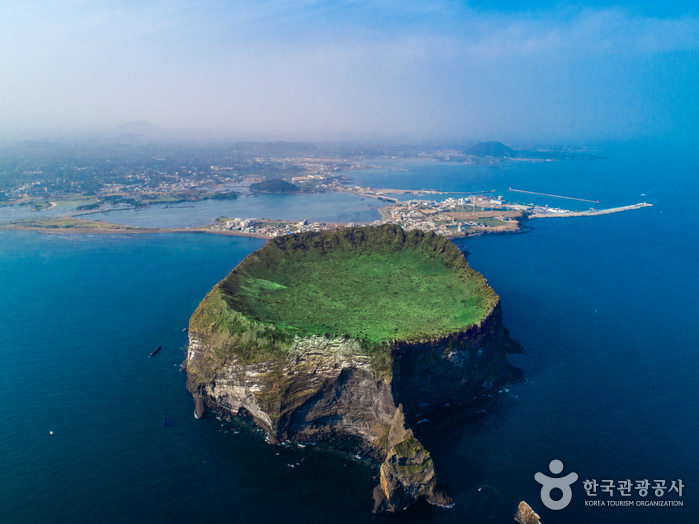
Seongsan Ilchulbong is one of Jeju Island’s most recognizable natural landmarks. This volcanic tuff cone was formed by an underwater eruption and is known for its large crater and distinctive coastal landscape.
A hiking trail leads from the entrance to the summit, where visitors can enjoy views of the crater and surrounding ocean. The sunrise is especially beautiful, making this a popular early-morning destination.
- Best for: Sunrise views, hiking, and volcanic landscapes
- Location: Seongsan-ri, Seongsan-eup, Seogwipo-si
- Getting there: Take an intercity bus toward Seongsan from Seogwipo or Jeju City, then walk to the entrance.
- Tip: The summit route involves uphill steps. Check the weather, admission information, and access restrictions before visiting. Some lower areas may be accessible separately from the summit trail.
2. Seopjikoji
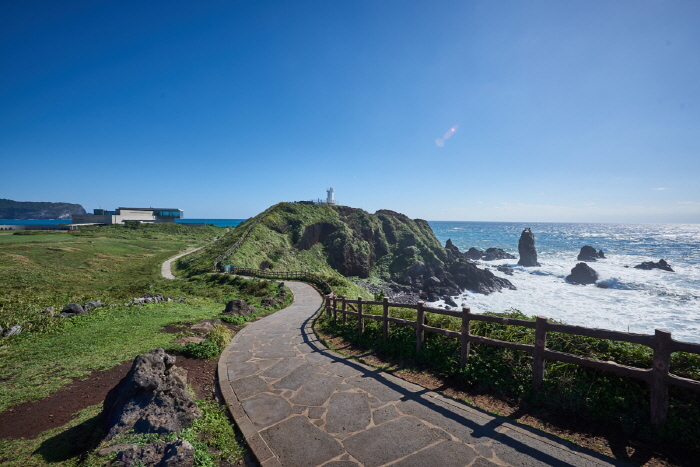
Seopjikoji is a scenic coastal area on Jeju’s eastern side, known for its open grasslands, rocky shoreline, and ocean views.
A walking path follows the coastline toward a lighthouse, offering views of the sea and nearby Seongsan Ilchulbong on clear days. The landscape changes with the seasons, making it a pleasant destination for photography and relaxed walks.
- Best for: Coastal walks, photography, and ocean scenery
- Location: Seopjikoji-ro, Seongsan-eup, Seogwipo-si
- Getting there: Take a bus toward Seongsan and continue by local transport or taxi.
- Tip: The coastal route is exposed to wind and weather. Wear comfortable shoes and bring a light jacket.
3. Cheonjiyeon Falls
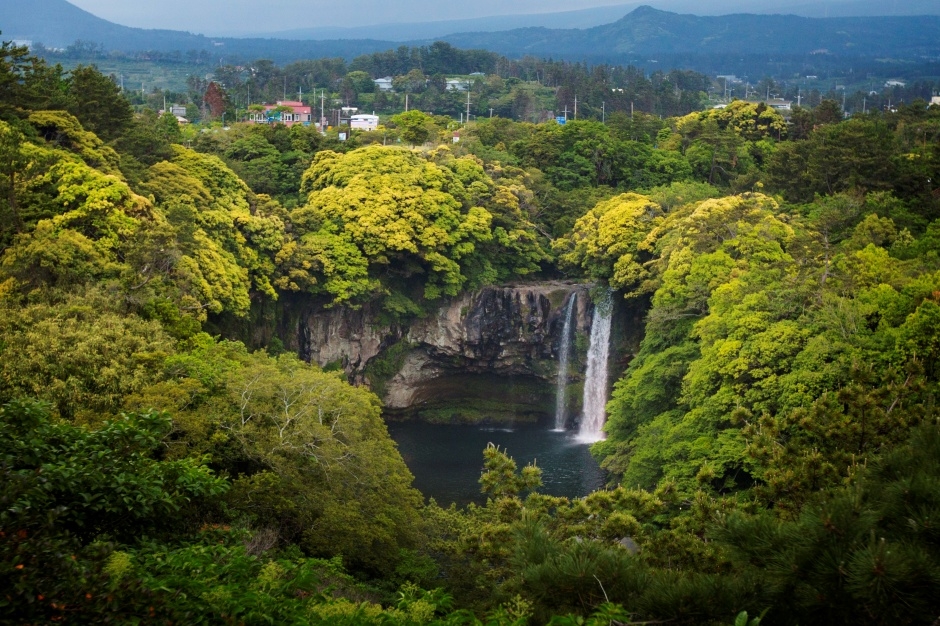
Cheonjiyeon Falls is one of Seogwipo’s best-known waterfalls. The water falls from a height of approximately 22 meters into a deep natural pool surrounded by subtropical vegetation.
A well-maintained walking path leads through a green valley to the waterfall. The route is relatively short and suitable for visitors who want to enjoy nature without a long hike.
The waterfall area is also known for its protected natural environment and rare wildlife.
- Best for: Waterfall scenery, nature walks, and photography
- Location: 2-15 Namseongjung-ro, Seogwipo-si
- Getting there: Take a local bus toward Cheonjiyeon Falls or travel by taxi from central Seogwipo.
- Tip: The site is also open in the evening, but check the latest admission hours before visiting.
4. Jeongbang Falls
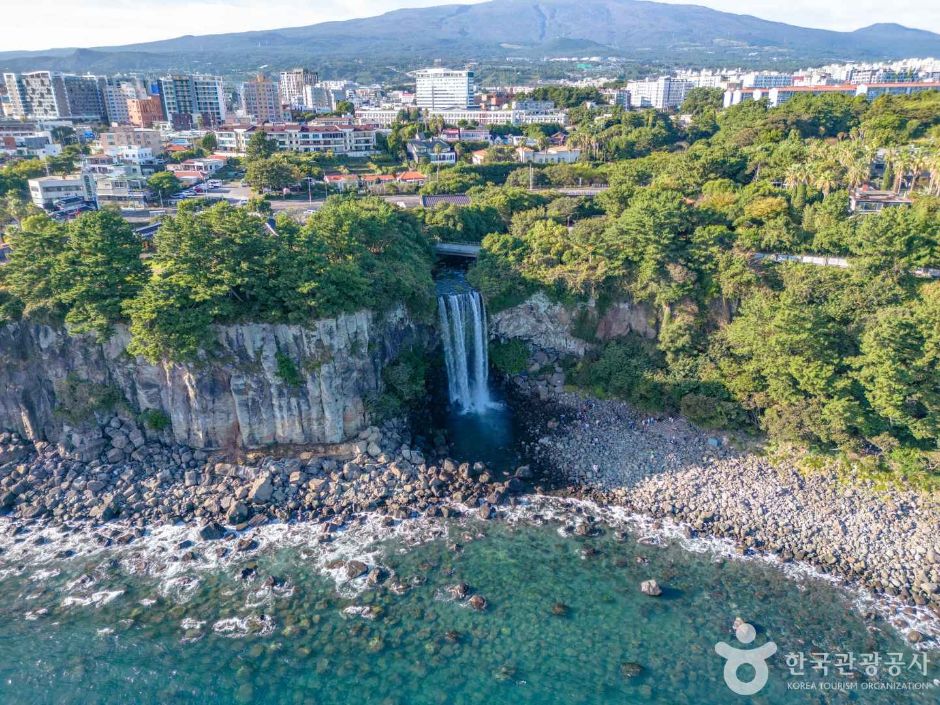
Jeongbang Falls is famous for its water cascading directly into the sea. It is one of the few coastal waterfalls in Asia and offers a distinctive view of freshwater meeting the ocean.
Visitors descend a series of steps from the entrance to reach the rocky area near the waterfall. The combination of dark volcanic cliffs, falling water, and blue sea makes it a popular photography location.
- Best for: Coastal waterfalls, volcanic cliffs, and photography
- Location: 37 Chilsimni-ro 214beon-gil, Seogwipo-si
- Getting there: A short taxi ride or walk from central Seogwipo, depending on your starting point.
- Tip: The rocks near the waterfall can be slippery. Stay away from dangerous areas and follow safety instructions.
5. Jusangjeolli Cliff
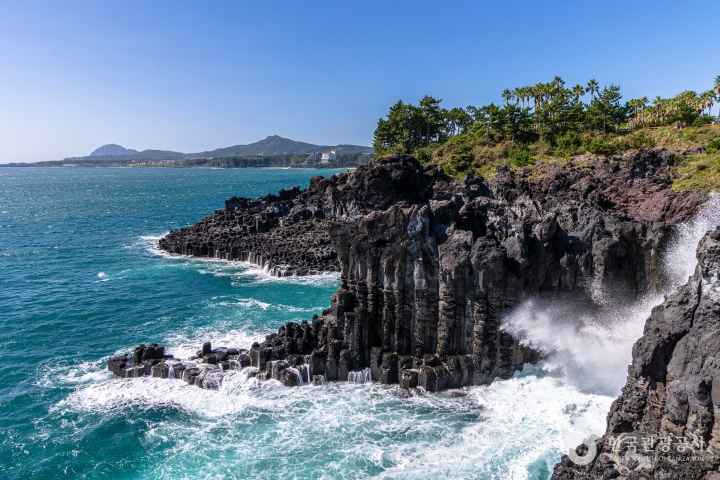
Jusangjeolli Cliff is a remarkable volcanic coastal formation created when hot lava cooled and contracted into regular geometric columns.
The dark stone columns form a dramatic wall along the shoreline, where waves crash against the cliffs. A designated viewing area allows visitors to admire the unusual rock formations safely.
It is located in the Jungmun area, making it easy to combine with nearby attractions.
- Best for: Volcanic geology, coastal views, and photography
- Location: 36-30 Ieodo-ro, Seogwipo-si
- Getting there: Take a bus toward Jungmun Tourist Complex and continue to the viewing area.
- Tip: Strong waves and sea spray can occur along the coast. Stay within designated viewing areas.
6. Sanbangsan Mountain and Yongmeori Coast
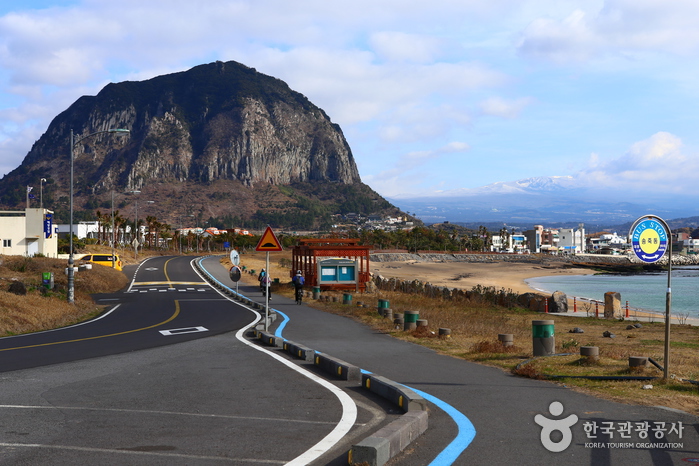
Sanbangsan is a distinctive volcanic mountain rising above the western coastline of Seogwipo. Its dome-shaped profile is visible from several surrounding areas and creates a striking landscape.
At its base, Yongmeori Coast features layered volcanic rock formations shaped by waves and wind over a long period. Walking along the coastline offers views of cliffs, rock layers, and the open sea.
- Best for: Volcanic landscapes, coastal geology, and photography
- Location: Sagye-ri, Andeok-myeon, Seogwipo-si
- Getting there: Take an intercity bus toward Andeok or Sanbangsan and continue on foot or by taxi.
- Tip: Yongmeori Coast is highly dependent on tides, waves, and weather. Access can be restricted for safety, so check local conditions before making the trip.
7. Seogwipo Maeil Olle Market
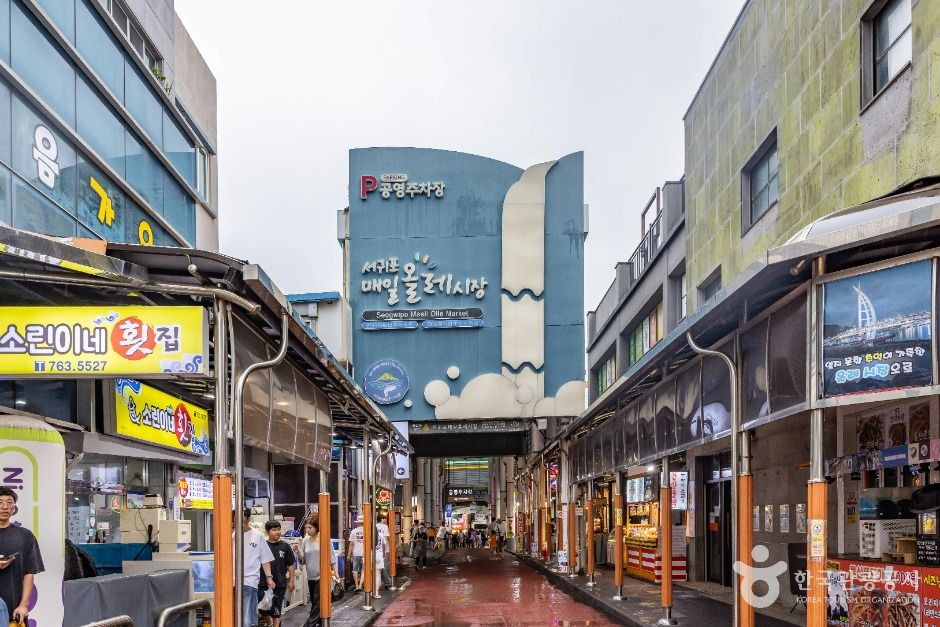
Seogwipo Maeil Olle Market is a traditional market in central Seogwipo, offering local food, fresh produce, seafood, and everyday products.
It is a good place to experience the city’s local atmosphere and sample Jeju specialties. Visitors can find snacks, prepared meals, citrus products, and souvenirs.
The market is also convenient for travelers staying in central Seogwipo because several attractions and accommodation areas are nearby.
- Best for: Local food, shopping, and everyday market culture
- Location: 22 Jungjeong-ro 73beon-gil, Seogwipo-si
- Getting there: Walk from central Seogwipo or take a local bus to the market area.
- Tip: Bring some cash as a backup, although many shops also accept cards. Individual stall hours vary.
8. Soesokkak Estuary
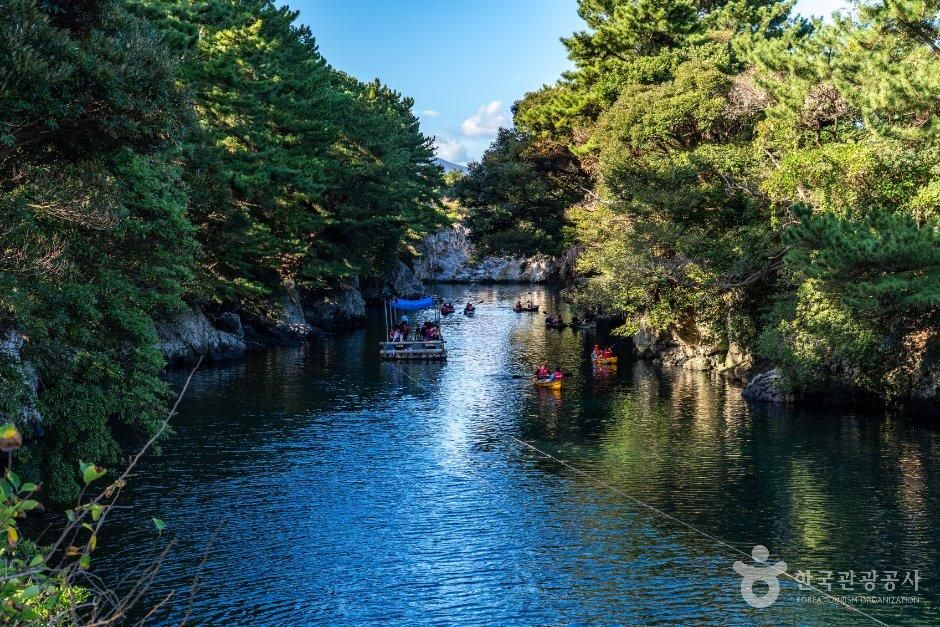
Soesokkak is a scenic estuary where freshwater from the Hyodoncheon Stream meets the sea. The area is known for its clear water, dark volcanic rocks, and green surroundings.
Visitors can enjoy the coastal scenery, walk along the nearby paths, or experience seasonal water activities when available.
It is a relaxing destination for travelers who want to explore a quieter part of southern Jeju.
- Best for: Nature scenery, coastal walks, and water activities
- Location: Soesokkak-ro, Hahyo-dong, Seogwipo-si
- Getting there: Take a local bus or taxi from central Seogwipo.
- Tip: Water activities depend on weather, operating schedules, and local conditions. Check availability before visiting.
Food to Try in Seogwipo
Seogwipo’s food culture is strongly connected to Jeju’s seafood, agriculture, and traditional island cuisine.
- Jeju Black Pork: Grilled pork served with vegetables and dipping sauces. It is one of the island’s best-known local dishes.
- Grilled Hairtail: Hairtail is commonly grilled or prepared in a spicy sauce with vegetables.
- Abalone Porridge: A mild rice porridge made with abalone, popular in coastal restaurants.
- Fresh Seafood and Raw Fish: Fishing villages and coastal restaurants offer seasonal fish, shellfish, and seafood dishes.
- Jeju Tangerines: Seogwipo is especially well known for its citrus-growing areas. Fresh mandarins, juices, and citrus desserts are popular local treats.
Seogwipo Maeil Olle Market is a convenient place to sample different snacks and local specialties in one visit.
How to Get Around Seogwipo-si
Seogwipo-si covers a large area, so travel times between attractions can be longer than expected.
- Intercity Buses: Connect Seogwipo with Jeju City and major destinations around the island.
- Local Buses: Useful for reaching central Seogwipo, Jungmun, Seongsan, and some coastal areas. Routes and frequency vary by location.
- Airport Limousine Buses: Services connect Jeju International Airport with Jungmun and Seogwipo. Check the latest route and timetable before departure.
- Rental Cars: A convenient option for visiting several attractions across eastern, central, and western Seogwipo.
- Taxi: Useful for destinations with limited public transportation, especially when visiting several places in one area.
For public transportation, allow extra time for transfers and waiting. If you are visiting multiple attractions in one day, grouping nearby destinations will make your trip more efficient.
How Much Time Do You Need?
One full day is enough to explore central Seogwipo, including Cheonjiyeon Falls, Jeongbang Falls, and Seogwipo Maeil Olle Market.
Allow another day for the Jungmun area, including Jusangjeolli Cliff and nearby attractions.
Seongsan Ilchulbong and Seopjikoji are better explored together as an eastern coastal trip. Sanbangsan Mountain and Yongmeori Coast can be combined into a western Seogwipo route.
For a more relaxed experience, consider spending two to three days exploring different parts of the city.
Why Visit Seogwipo-si?
Seogwipo-si offers some of Jeju Island’s most impressive natural scenery, from volcanic cliffs and coastal waterfalls to sunrise viewpoints and traditional markets.
It is an excellent destination for travelers interested in nature, photography, hiking, local food, and coastal experiences. By exploring its eastern, central, and western areas separately, visitors can enjoy a more complete picture of southern Jeju.
Before visiting, check current attraction opening hours, admission fees, bus schedules, weather conditions, and access restrictions, especially for coastal sites such as Yongmeori Coast.