Dong-gu is a historic district in central Busan, close to Busan Station and the city’s port. It combines international food, old hillside neighborhoods, modern Korean history, and views of the harbor.
It is a practical area to explore when arriving in Busan by train, especially for travelers interested in local neighborhoods and the stories behind the city.
1. Busan Chinatown and Shanghai Street
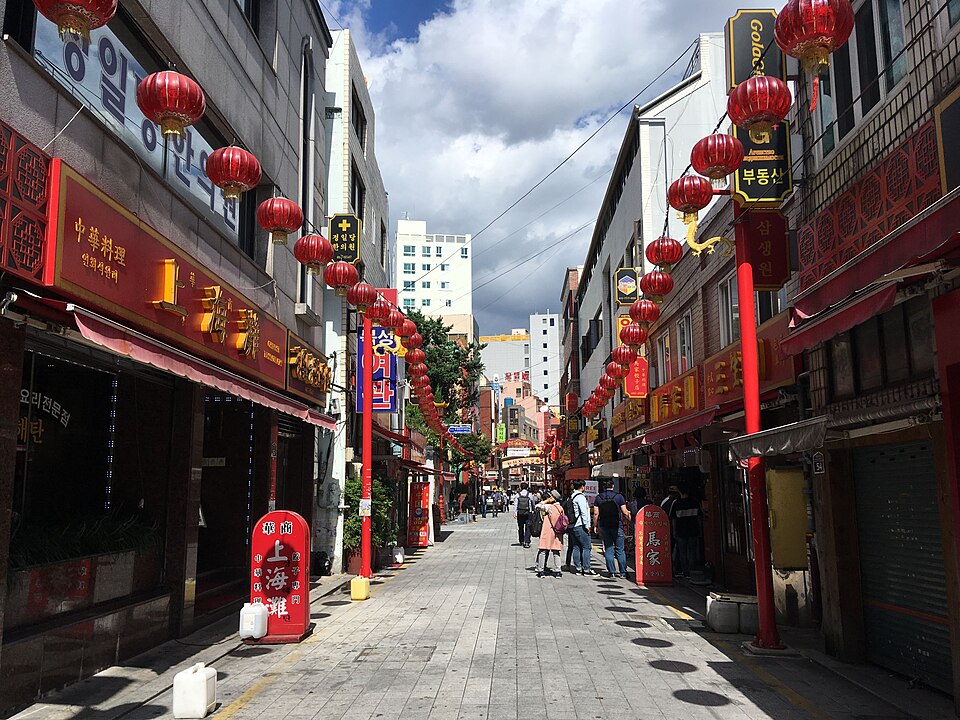

Located near Busan Station, Busan Chinatown is known for Chinese restaurants, distinctive street decorations, and a long history of cultural exchange. Nearby Shanghai Street adds more dining options and an international atmosphere.
What to do
- Explore the streets and decorative gates.
- Try Chinese-Korean dishes such as jajangmyeon or jjamppong.
- Stop for a meal before or after arriving at Busan Station.
Getting there: From Busan Station on Metro Line 1, use Exit 1 and walk toward the Chinatown entrance.
Allow: Around 30–60 minutes, or longer if you plan to eat.
2. Choryang Ibagu-gil
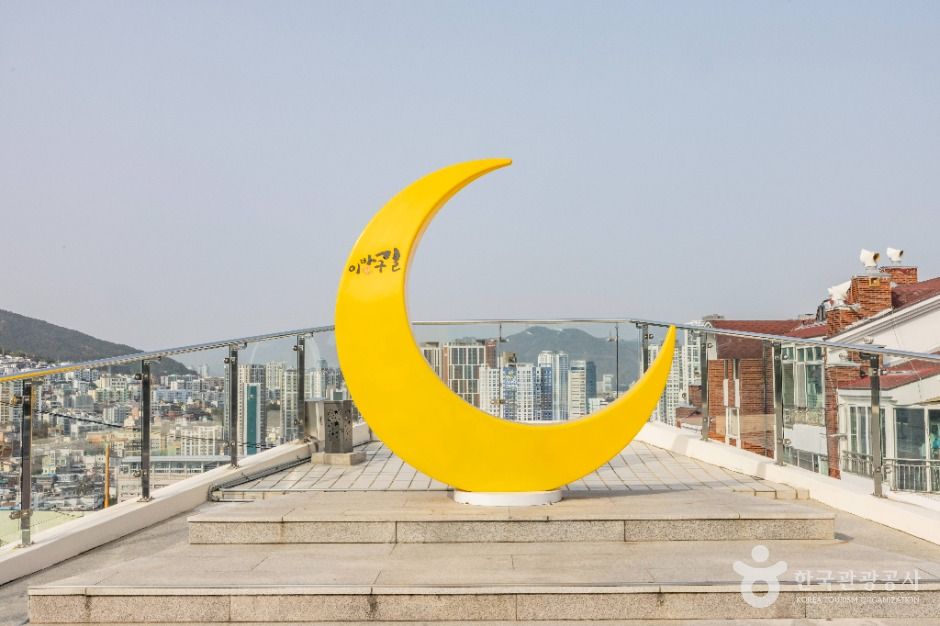
Choryang Ibagu-gil is a hillside walking route that tells stories of everyday life in old Busan. The neighborhood developed as people built homes on the slopes overlooking the port, including refugees who came to Busan during the Korean War.
Along the route, visitors can find historic buildings, small cultural spaces, viewpoints, and narrow residential lanes.
Why visit: It offers a closer look at Busan beyond beaches, shopping districts, and major attractions.
Travel tip: Wear comfortable shoes. The route includes steep slopes and stairs, and some sections pass through residential areas where visitors should keep noise low.
3. Choryang 168 Stairs
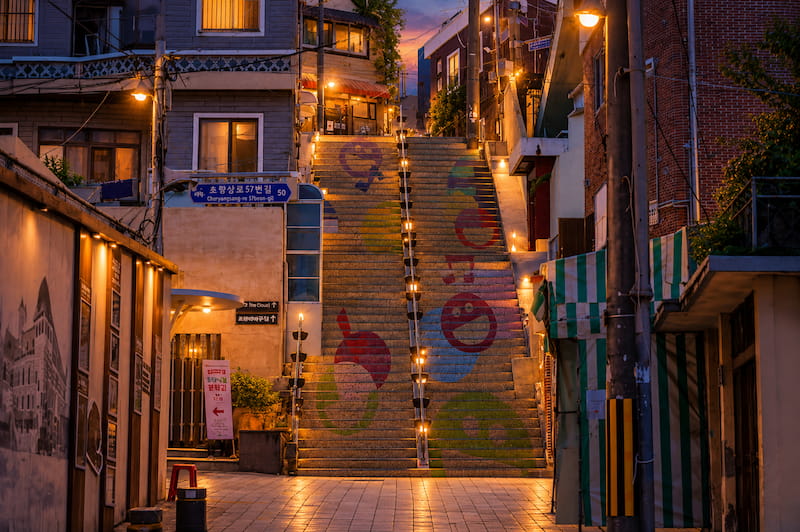
The 168 Stairs connect the lower part of Choryang with the hillside neighborhood above. The steep staircase reflects the daily challenges residents once faced when traveling between home, the port, and the city below.
Today, the area is one of the most recognizable stops along Choryang Ibagu-gil. Nearby viewpoints offer views of Busan’s port and surrounding hills.
A sloped elevator system, known as Choryang 168 Stairs Skyway, began operating in March 2025, replacing the former monorail.
Travel tip: Check current operating conditions before relying on the elevator. If you choose to walk, allow extra time for the steep climb.
4. Kim Min-bu Observatory and Hillside Views
Kim Min-bu Observatory is located along the 168 Stairs route. It provides a place to pause and look across the hillside neighborhood and the harbor.
The surrounding streets are particularly interesting for travelers who enjoy urban photography and seeing how Busan’s residential areas climb the slopes above the city.
For wider city views, continue exploring the upper hillside roads where the harbor, buildings, and neighborhood lights create a different perspective after sunset.
Best time to visit: Late afternoon through early evening, depending on the weather and visibility.
5. North Port Waterfront Park
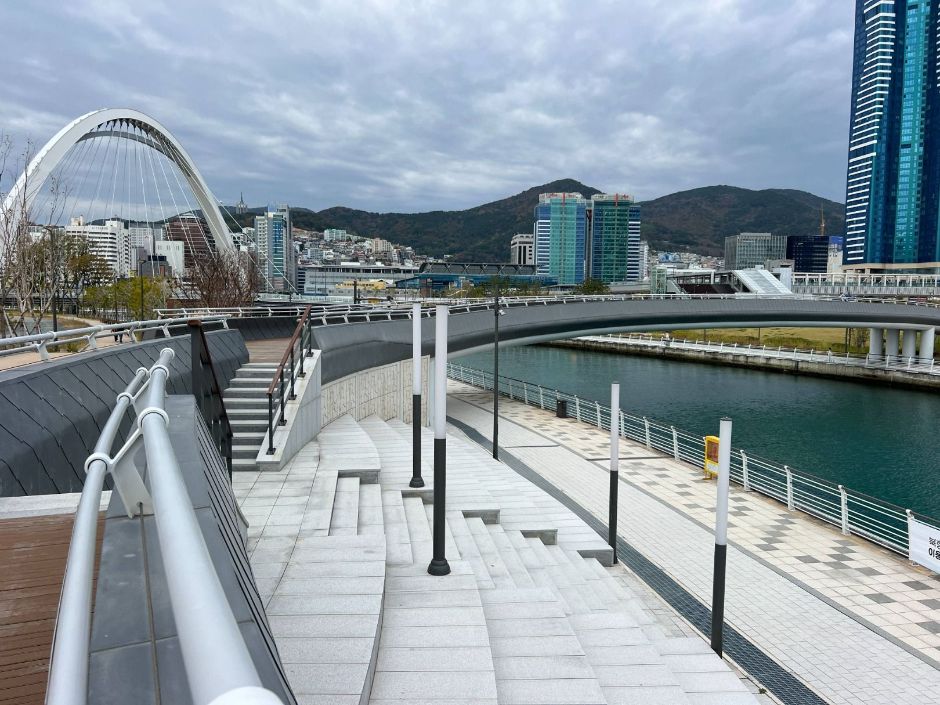
North Port Waterfront Park offers open spaces and views of Busan’s harbor in an area undergoing major waterfront redevelopment. It provides a contrast to the narrow lanes and steep streets of Choryang.
The waterfront is suitable for a relaxed walk, harbor photography, and a break from sightseeing around Busan Station.
Travel tip: Development and access conditions may vary by section, so check current local information before planning a longer waterfront walk.
What to Eat in Dong-gu
Dong-gu offers a mix of Chinese-Korean food, casual local restaurants, and traditional Korean meals.
- Jajangmyeon: Noodles with a savory black bean sauce.
- Jjamppong: Spicy noodle soup with seafood and vegetables.
- Korean barbecue: A popular option in parts of the district, particularly around established dining streets.
- Everyday Korean meals: Look for restaurants serving rice, soup, stews, and side dishes.
Restaurant prices and menus vary, so check the displayed menu before ordering.
How to Get Around Dong-gu
- Metro: Busan Station on Line 1 is the main starting point for Chinatown and Choryang.
- Walking: Chinatown is easy to explore on foot. Choryang Ibagu-gil and the 168 Stairs require more time and effort because of the hills.
- Bus: Local buses serve hillside neighborhoods and other parts of Dong-gu. Check the destination and return service before boarding.
- Taxi: Useful when traveling between the station, hillside attractions, and the waterfront without climbing steep roads.
How Much Time Do You Need?
- 1 hour: Explore Chinatown and Shanghai Street.
- 2–3 hours: Visit Chinatown and walk part of Choryang Ibagu-gil, including the 168 Stairs area.
- Half a day: Combine the historic hillside route with North Port Waterfront Park and a local meal.
Is Dong-gu Worth Visiting?
Dong-gu is a good choice for travelers who want to understand Busan’s history, explore older neighborhoods, and enjoy harbor views near the main railway station.
For a convenient visit, start at Busan Station, explore Chinatown, and then continue to Choryang Ibagu-gil and the 168 Stairs area. Add North Port Waterfront Park if you have extra time.
Before visiting, check current access arrangements for the hillside elevator and waterfront areas. Respect residents’ privacy when photographing homes and narrow residential streets.