Jongno 3-ga Pojangmacha Street is a lively area in central Seoul where small street stalls serve Korean food and drinks late into the evening. Under colorful tents and outdoor lights, visitors can enjoy seafood, spicy dishes, hot soups, and simple Korean comfort food.
The area is popular with office workers and visitors looking for a casual Korean drinking-and-dining experience. Instead of choosing one restaurant, you can walk along the alley, look at the menus, and select a stall that suits your appetite.
What to Eat
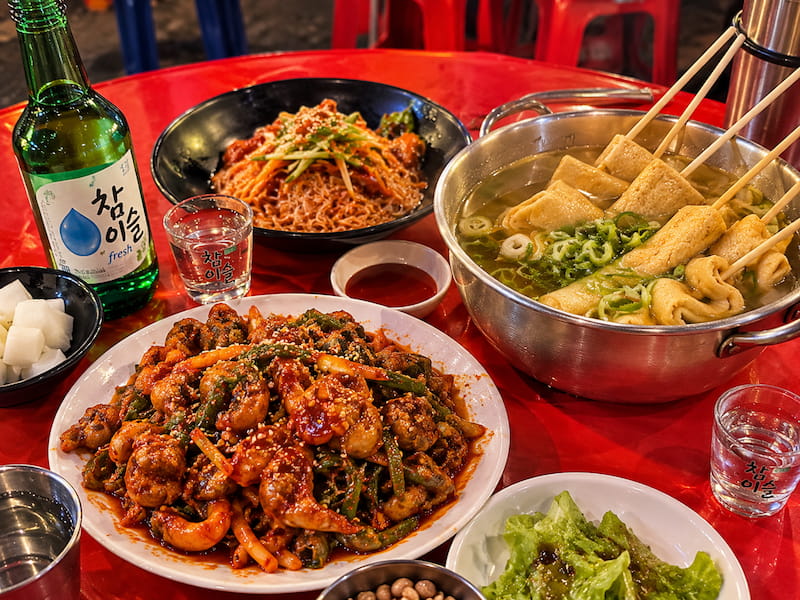
Popular dishes vary by stall, but these are common choices in the Jongno 3-ga street-food and pojangmacha area.
| Dish | What it is | Approximate price |
|---|---|---|
| Golbaengi Muchim | Spicy sea snails mixed with vegetables | ₩15,000–20,000 |
| Eomuk-tang | Fish cakes served in a hot broth | ₩10,000–15,000 |
| Dakbal | Spicy chicken feet | ₩15,000–20,000 |
| San-nakji | Freshly cut raw octopus | ₩20,000–30,000 |
| Seafood dishes | Seasonal shellfish or other seafood | Varies by stall |
Prices are estimates, not a fixed street-wide menu. Drinks such as soju and beer are usually ordered separately.
How to Order and Eat
Pojangmacha meals are informal. Most visitors sit at a small table, order one or more dishes to share, and enjoy them with drinks.
- For a first visit: Try eomuk-tang with golbaengi muchim. The warm broth and spicy seafood salad offer two different Korean street-food flavors.
- For sharing: Order a main dish for the table and add another dish if you are still hungry. Check the portion size and price before ordering.
- For visitors who do not speak Korean: Point to a dish on a menu or at a neighboring table and say, “Igeo juseyo” (이거 주세요), meaning “Please give me this.”
- For seafood: Ask about the ingredients and preparation if you have allergies or dietary restrictions.
Minimum Order and Group Size
There is no single minimum order rule for the entire street. Some stalls may accept one dish for one person, while others may expect customers to order more than one item, especially when sharing a table.
For two people, a practical starting point is one main dish and one soup or side dish. Confirm the minimum order directly with the stall before sitting down.
A Short History and Local Character
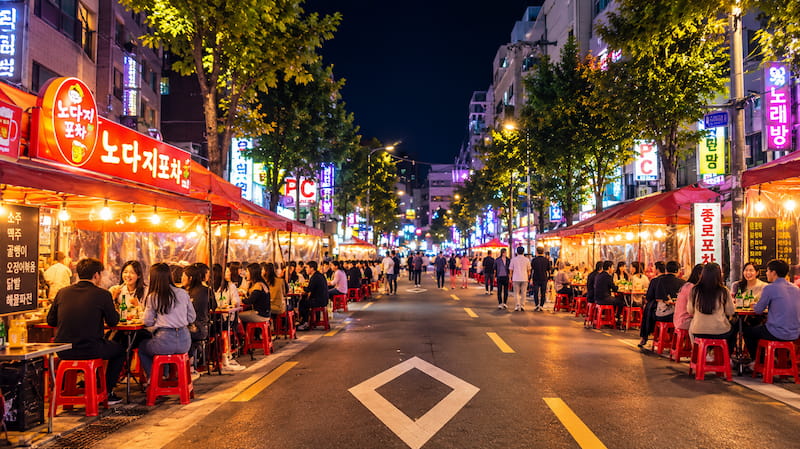
Jongno has long been part of Seoul’s busy commercial and working district. As nearby offices, markets, and entertainment areas brought people into the neighborhood after work, informal street stalls became places to eat, drink, and meet friends.
Today, the pojangmacha area keeps that casual nighttime character. Small tables, tented stalls, warm lights, and the sounds of cooking create an atmosphere quite different from Seoul’s modern restaurants.
The stalls are independent, so menus, prices, seating, and operating hours can vary from one place to another.
How to Get There
The easiest way to reach Jongno 3-ga Pojangmacha Street is by subway. The neighborhood is served by Seoul Subway Lines 1, 3, and 5, with Jongno 3-ga Station as the main access point.
By Subway
Jongno 3-ga Station (종로3가역)
- Line 1: Use Exit 3 or 4 as a convenient starting point for the Jongno street-food and outdoor dining area. Follow the nearby streets and look for the illuminated food stalls.
- Line 3: Arrive at Jongno 3-ga Station and follow the station signs toward the exits for the Jongno 3-ga and Ikseon-dong areas. The distance depends on which part of the alley you are visiting.
- Line 5: This line also stops at Jongno 3-ga Station. Follow the station signs to the street-level exits and continue toward the nearby pojangmacha stalls.
Important: Jongno 3-ga has many exits, and the stalls are spread across several nearby streets. Exit numbers and walking distances depend on the particular stall or alley entrance. Check the destination on a current map before leaving the station.
By Bus
Several bus stops serve the wider Jongno 3-ga and central Jongno area. For the most convenient route:
- Search for “Jongno 3-ga Pojangmacha Street” or the exact stall name in a Korean navigation app.
- Check the suggested bus stop, such as a stop around Jongno 3-ga or Jongno 2-ga.
- After getting off, follow the walking directions to the specific alley entrance. Some bus stops are on the main road, so you may need to walk into the smaller streets.
- If you are already in central Seoul, the subway is generally easier than choosing a bus because the alley is close to Jongno 3-ga Station.
Bus routes and stop locations can change, so check the current route before departure rather than relying on a fixed bus number.
Best Time to Visit
The area is generally livelier in the evening, when the stalls begin serving customers after work. Some stalls open earlier, but opening times and closing days differ by business.
Friday and Saturday evenings can be especially busy. Arriving earlier in the evening may make it easier to find a seat.
Practical Tips
- Bring cash as a backup, although payment methods vary by stall.
- Check the menu and prices before ordering.
- Ask whether a dish is intended for sharing and whether there is a minimum order.
- Keep in mind that outdoor seating may be affected by rain, cold weather, or local operating conditions.
- Check current opening hours and transport information before visiting.
Jongno 3-ga Pojangmacha Street is a good choice for travelers who want to experience Seoul’s informal nighttime food culture, sample several Korean dishes, and enjoy a lively alley rather than a formal restaurant setting.