Majang Meat Market is one of Seoul’s best-known meat markets, located in Seongdong-gu. Its shops sell Korean beef (hanwoo), pork, and specialty cuts, while nearby restaurants offer ways to enjoy meat purchased at the market.
The market is a working wholesale and retail district rather than a single food court. It is best for visitors who want to browse butcher shops, choose specific cuts, and enjoy a Korean barbecue meal nearby.
What to Eat
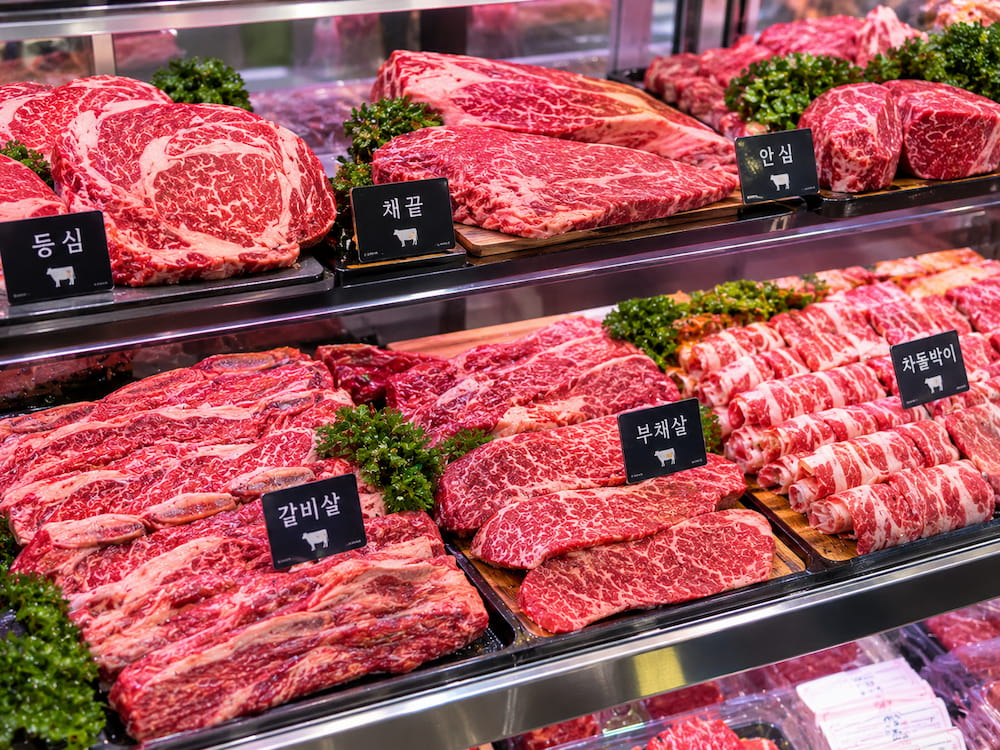
Hanwoo Korean Beef
Hanwoo is the market’s best-known specialty. Popular barbecue cuts include ribeye, sirloin, short ribs, and other beef cuts. Choose the cut according to your preferred texture and budget.
Korean Beef Tartare (Yukhoe)
Some shops and restaurants serve yukhoe, finely sliced raw beef seasoned with ingredients such as sesame oil and pear. It is a traditional Korean dish, but it is raw meat, so choose a reputable restaurant and avoid it if you need to be cautious about raw foods.
Pork and Specialty Cuts
The market also sells pork and various beef and pork offal. Availability varies by butcher and season.
Prices and How to Order
Prices are generally based on the cut, grade, origin, and weight. There is no single market-wide menu price.
- Buying meat: Check the displayed price per weight unit and confirm the total price before the butcher cuts or packs your order.
- Grilling nearby: Some restaurants let customers grill meat purchased from a butcher. Ask the restaurant in advance whether outside meat is accepted and whether a table or preparation fee applies.
- Minimum order: There is no confirmed market-wide minimum. Individual butcher shops and grill restaurants may set their own minimum purchase, portion size, or table-charge rules.
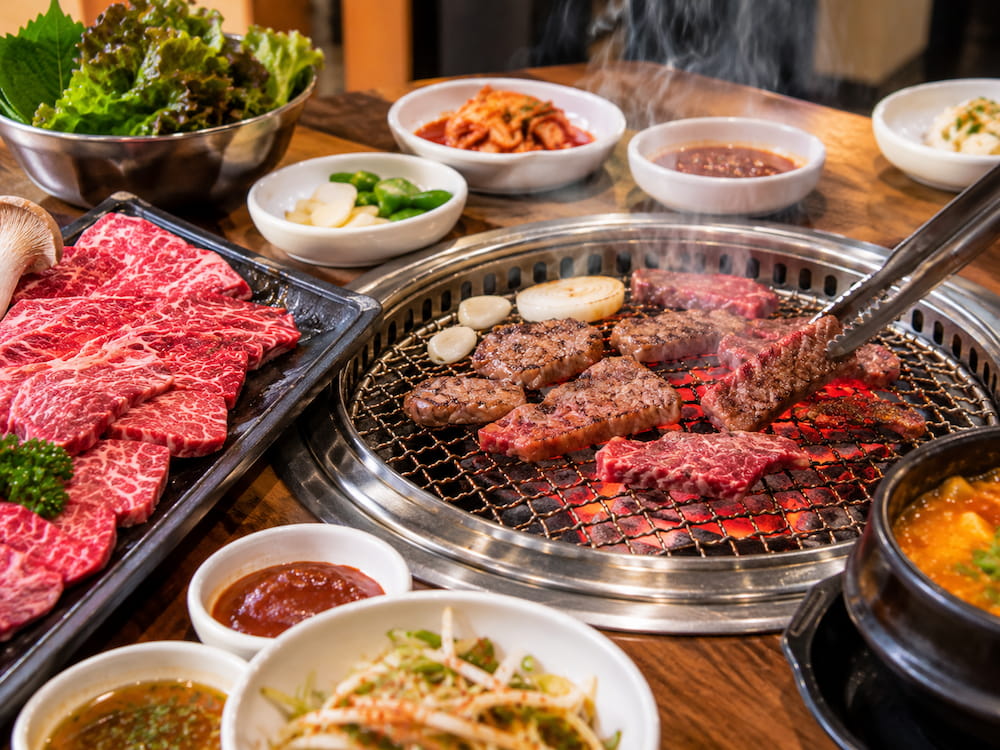
- How to eat: Grill the meat to your preferred doneness, then enjoy it with salt, sesame oil, or ssamjang. Wrap it in lettuce or perilla leaves with garlic and other side dishes.
- Tip: If you are visiting alone, ask whether a small amount of meat can be purchased and whether the restaurant accepts solo diners before buying.
A Short History
Majang Meat Market began in 1963, after a slaughterhouse moved from Jongno to the area. Meat sellers and related shops gathered around it, creating a large market for livestock products. The slaughterhouse closed in 1998, but the meat market continued to operate.
Today, Majang is known for its extensive butcher shops, fresh meat sales, and nearby restaurants where visitors can enjoy Korean barbecue.
How to Get There
By Subway — Recommended
Majang Station (마장역), Seoul Subway Line 5
- Exit 2: A useful exit for Majang Meat Market. Some guides estimate about 7 minutes on foot to the market area, though the exact time depends on the entrance and shop.
- Exit 1: Also used for access to the market’s western side. Allow approximately 10–15 minutes for some shops and entrances; check the exact destination before walking.
- Walking directions: Search “마장축산물시장” or the specific butcher shop in a Korean map app. The market covers several streets and has multiple entrances, so the nearest exit depends on where you are going.
Yongdu Station (용두역), Seoul Subway Line 2
- Exit 4: Another option for the market area. Official and local travel guides give walking estimates ranging from about 7 to 10 minutes, depending on the destination.
- Walking directions: From Exit 4, follow directions toward Majang Meat Market and check the route to the specific market gate or shop. Do not assume every butcher shop is the same distance from the station.
For a first visit, Majang Station on Line 5 is a straightforward starting point. Use the exact Korean destination in your map app to avoid walking to the wrong entrance.
By Bus
The official Seoul heritage listing identifies the Majang Livestock Products Market (마장축산물시장) bus stop, with stop IDs 04-119 and 04-120.
Bus routes listed for the market include:
- Blue buses: 110B, 141, 145, and other routes
- Green buses: 2015 and 2222
Bus routes and stop locations can change. Before boarding, search “마장축산물시장” in a live Seoul transit app and confirm that the bus stops at 04-119 or 04-120. From the market stop, the official heritage listing describes the walk as approximately 1 minute to the market area, but individual shops may be farther inside.
Practical Tips
- This is a working meat market. Butcher shops and restaurants may have different opening hours and closing days.
- Ask whether the restaurant accepts meat purchased from another shop before buying.
- Confirm the meat’s price per weight unit, total cost, and any separate grilling or table fee.
- The market can be busy, and delivery vehicles may use its narrow lanes. Keep walkways clear and follow shop staff directions.
Check current shop hours, meat prices, restaurant policies, and transport information before visiting.