Pocheon is a nature-focused destination in northern Gyeonggi-do, northeast of Seoul. The city is known for dramatic rock formations, peaceful lakes, waterfalls, gardens, and outdoor attractions. It offers a different travel experience from Korea’s busy metropolitan areas.
Visitors can explore a former granite quarry transformed into an art park, walk beside a mountain lake, discover volcanic landscapes along the Hantangang River, and enjoy seasonal gardens. In addition, Pocheon is a good choice for travelers who enjoy photography, outdoor activities, and relaxing day trips.
1. Pocheon Art Valley
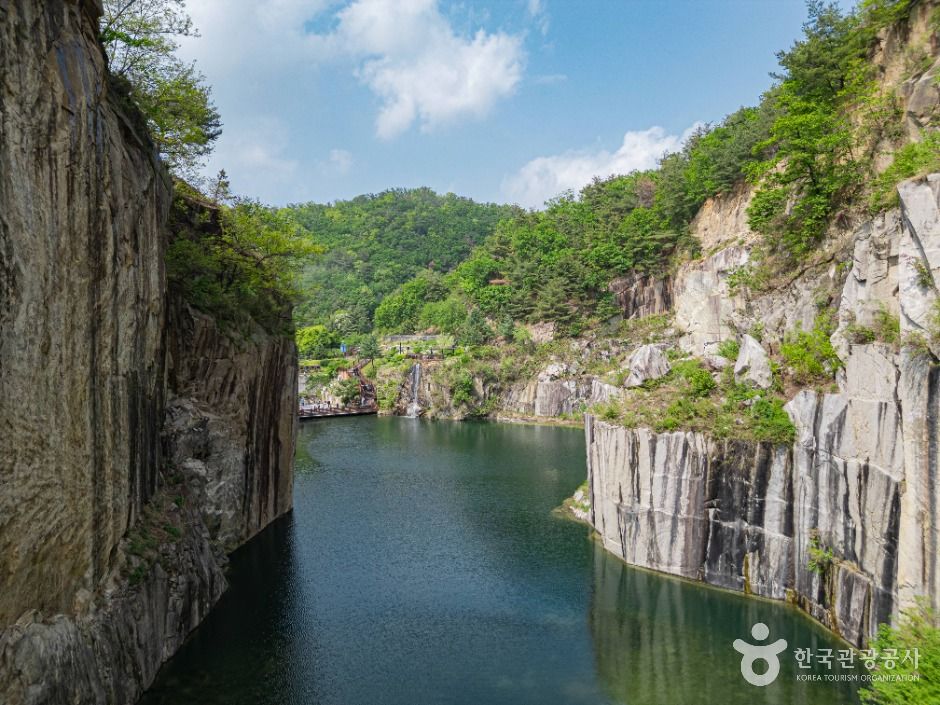
Pocheon Art Valley is one of the city’s most distinctive attractions. The site began as a granite quarry, but Pocheon transformed the abandoned industrial landscape into a cultural and artistic park.
Its main highlight is Cheonjuho Lake, which sits inside the former quarry basin. Deep blue-green water contrasts with towering granite cliffs, creating an unusual landscape that feels very different from a typical Korean park.
Visitors can also explore outdoor sculptures, walking paths, exhibition spaces, and scenic viewpoints. Furthermore, a monorail helps visitors reach the upper areas without walking the entire slope.
Travel tip: Allow enough time to explore the lake and viewpoints. Check the monorail schedule and admission information before visiting.
2. Sanjeong Lake
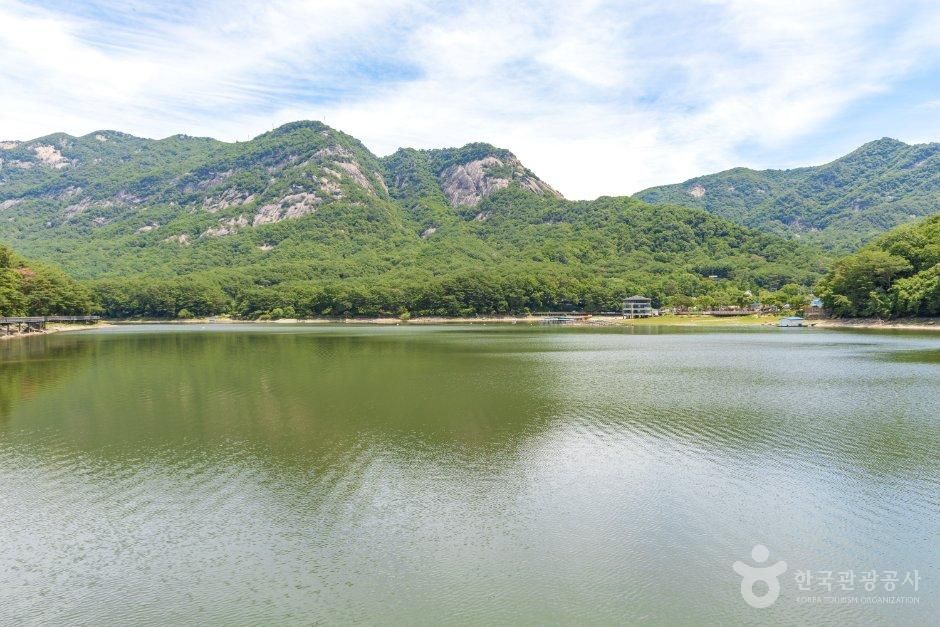
Sanjeong Lake is a popular outdoor destination surrounded by mountains in northern Pocheon. Its name refers to the lake’s location among the surrounding mountain scenery.
A lakeside walking route allows visitors to enjoy the water, forested slopes, and changing seasonal colors. In spring and summer, the area offers fresh green scenery. Meanwhile, autumn brings colorful foliage, and winter creates a quieter atmosphere around the lake.
Visitors can also find cafés, restaurants, and recreational facilities around the tourist area. As a result, Sanjeong Lake works well for travelers who want to combine sightseeing with a relaxed break.
Travel tip: Visit during the daytime for the best views of the surrounding mountains. Check local conditions before planning seasonal water or winter activities.
3. Bidulginang Falls
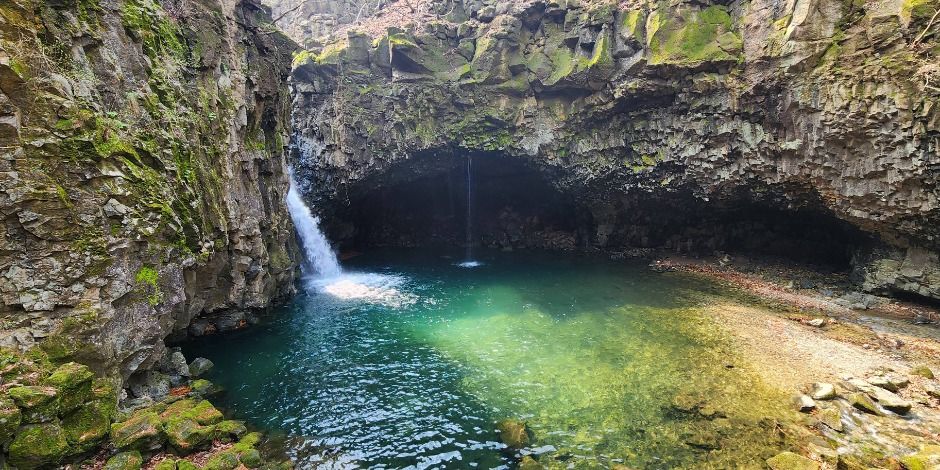
Bidulginang Falls is a remarkable natural attraction within the Hantangang River area. The waterfall sits among dark volcanic rock formations, creating a dramatic landscape with a narrow gorge and distinctive geological features.
The surrounding basalt cliffs reveal part of the region’s volcanic history. Over time, flowing water shaped the rock and formed the gorge that visitors can see today.
A short visit to the designated viewing area offers opportunities to appreciate the waterfall and surrounding scenery. Moreover, the shaded landscape provides a refreshing stop during warmer months.
Travel tip: Water flow can change depending on rainfall and season. Follow the marked paths and respect any temporary access restrictions.
4. Hantan River Sky Bridge
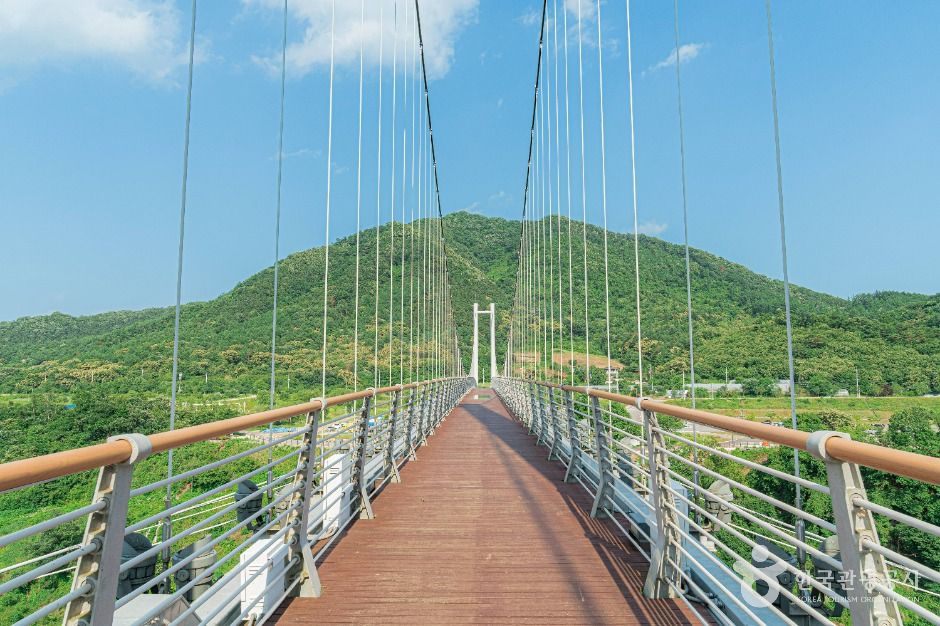
The Hantan River Sky Bridge offers wide views of the river gorge and surrounding cliffs. The pedestrian bridge provides a different perspective of the Hantangang landscape, making it a popular stop for sightseeing and photography.
The river area features striking volcanic rock formations created by ancient lava flows and later erosion. Therefore, the bridge visit can also introduce travelers to the region’s unique geological landscape.
Visitors who enjoy scenic walks can combine the bridge with nearby natural attractions. In particular, Bidulginang Falls and other Hantangang viewpoints make useful additions to the same regional itinerary.
Travel tip: Check the bridge’s operating conditions before departure. Strong winds, severe weather, or maintenance may affect access.
5. Herb Island

Herb Island is a themed garden and recreation complex in Pocheon. It features herb gardens, greenhouses, Mediterranean-inspired buildings, shops, cafés, and seasonal flower displays.
The attraction offers a different atmosphere from Pocheon’s mountain and river landscapes. Visitors can stroll through themed areas, discover aromatic plants, and browse herb-related products.
Seasonal flowers also make the garden attractive for photography. In addition, evening lighting and special seasonal events can create a different experience after sunset.
Travel tip: Check the seasonal event calendar, operating days, and evening program schedule before visiting. Some activities and experiences may require separate payment.
6. Baegun Valley
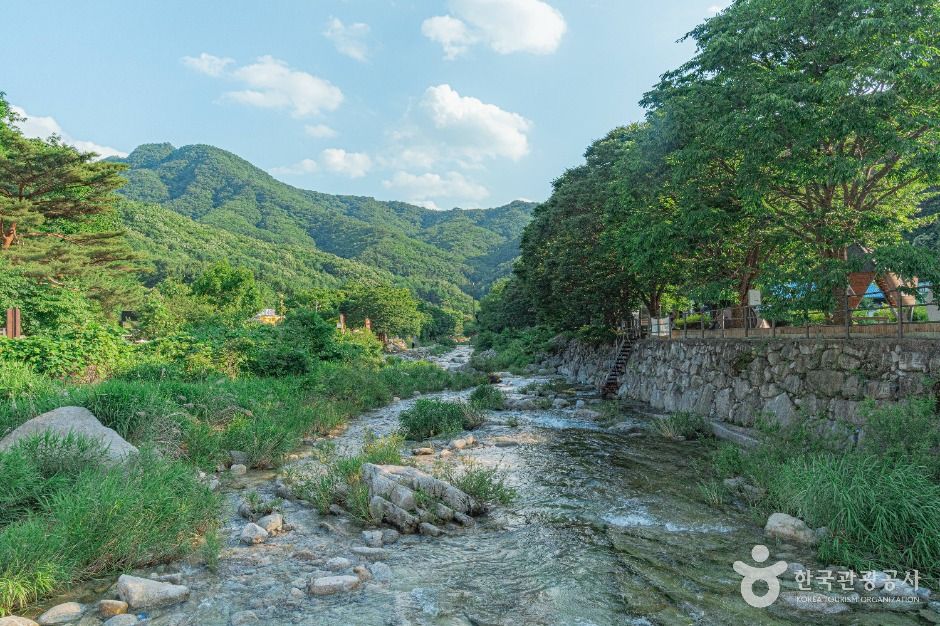
Baegun Valley is a natural recreation area surrounded by forested mountains in eastern Pocheon. Clear streams, rocky pools, and shaded walking areas make it a popular destination during warmer months.
The valley offers a quieter experience for visitors who prefer nature over large tourist attractions. Furthermore, nearby mountain scenery creates opportunities for photography and short outdoor walks.
Travelers can enjoy the sound of flowing water and take a break from busy sightseeing schedules. However, water levels and access conditions may change after heavy rain.
Travel tip: Wear shoes with good grip when walking near rocks and streams. Avoid entering the water during heavy rain or when local authorities restrict access.
Getting Around Pocheon
Pocheon covers a large area, and its main attractions are spread across different townships. Therefore, transportation planning is important, especially for visitors who want to see several places in one day.
Travelers can reach Pocheon from Seoul by intercity or local buses, depending on their departure point. However, public transportation between individual attractions may take time, and some destinations require additional local bus or taxi connections.
For a more convenient itinerary, consider arranging transportation around nearby attractions:
- Sinbuk-myeon area: Pocheon Art Valley and Herb Island.
- Yeongbuk-myeon area: Sanjeong Lake, Bidulginang Falls, and Hantan River Sky Bridge.
- Idong-myeon area: Baegun Valley.
A rental car or taxi can make it easier to visit multiple areas in one day. Meanwhile, travelers using public transportation should check local bus schedules and transfer points in advance.
Recommended Visit Duration
Pocheon offers enough attractions for a full day or a longer nature-focused trip. The best duration depends on your transportation and interests.
- Half day: Visit Pocheon Art Valley or Sanjeong Lake.
- Full day: Combine Pocheon Art Valley with Herb Island, or explore the Hantangang area and Bidulginang Falls.
- Two days: Enjoy the main attractions at a slower pace and include Baegun Valley or additional outdoor activities.
Because the attractions are spread across the city, avoid planning too many distant stops in a short period.
Travel Tips
- Plan your route: Group attractions by area to reduce travel time.
- Check transportation: Confirm bus schedules and connections before leaving.
- Prepare for walking: Some attractions include slopes, stairs, or uneven outdoor paths.
- Check the weather: Rain and strong winds may affect waterfalls, bridges, and outdoor activities.
- Bring seasonal clothing: Mountain and riverside areas can feel cooler than central Seoul.
- Confirm visitor information: Check current opening hours, closure days, admission fees, and activity schedules before visiting.
Is Pocheon Worth Visiting?
Pocheon is a rewarding destination for travelers who want to explore Korea’s natural landscapes beyond Seoul. Its former quarry, mountain lake, volcanic gorge, waterfall, and themed gardens create a varied travel experience.
Unlike a typical city sightseeing trip, Pocheon focuses on outdoor scenery and spacious attractions. Moreover, visitors can choose between relaxed lakeside walks, geological viewpoints, garden visits, and cultural spaces.
For travelers exploring Gyeonggi-do, Pocheon offers a memorable way to experience the region’s nature and distinctive landscapes.