Gwangjang Market is one of Seoul’s best-known traditional markets, with a busy food alley where visitors can try several Korean dishes in one stop. Three popular choices are bindaetteok (mung-bean pancakes), mayak gimbap (mini rice rolls), and yukhoe (Korean-style raw beef).
The food stalls and small restaurants are close together, making the market a convenient place to sample different foods while exploring central Seoul.
What to Eat
1. Bindaetteok — Crispy Mung-Bean Pancake
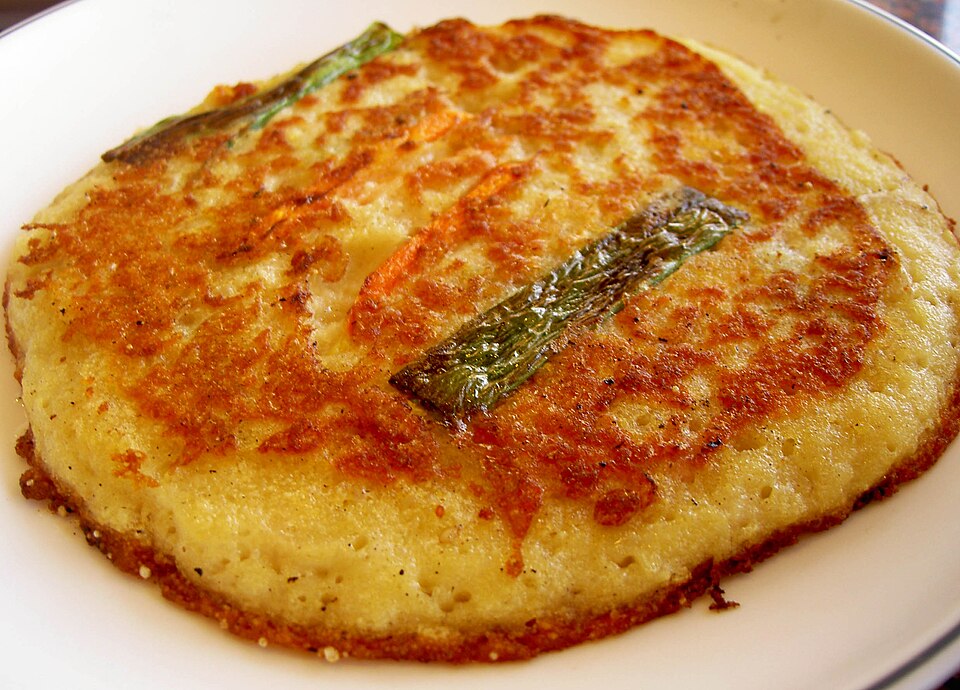

Bindaetteok is a thick savory pancake made from ground mung beans, often mixed with bean sprouts, kimchi, and sometimes pork. It is fried on a hot griddle until the outside is golden and crisp while the inside stays soft.
- Typical price: around ₩5,000–₩7,000 per pancake
- Minimum order: usually one pancake; it can be shared by two people as a snack
- How to eat: cut or tear off a piece and dip it in the soy sauce and onion mixture served alongside. It is best eaten hot, soon after it comes off the griddle.
The pancake is filling, so consider sharing one if you plan to try several dishes in the market.
2. Mayak Gimbap — Small Korean Rice Rolls
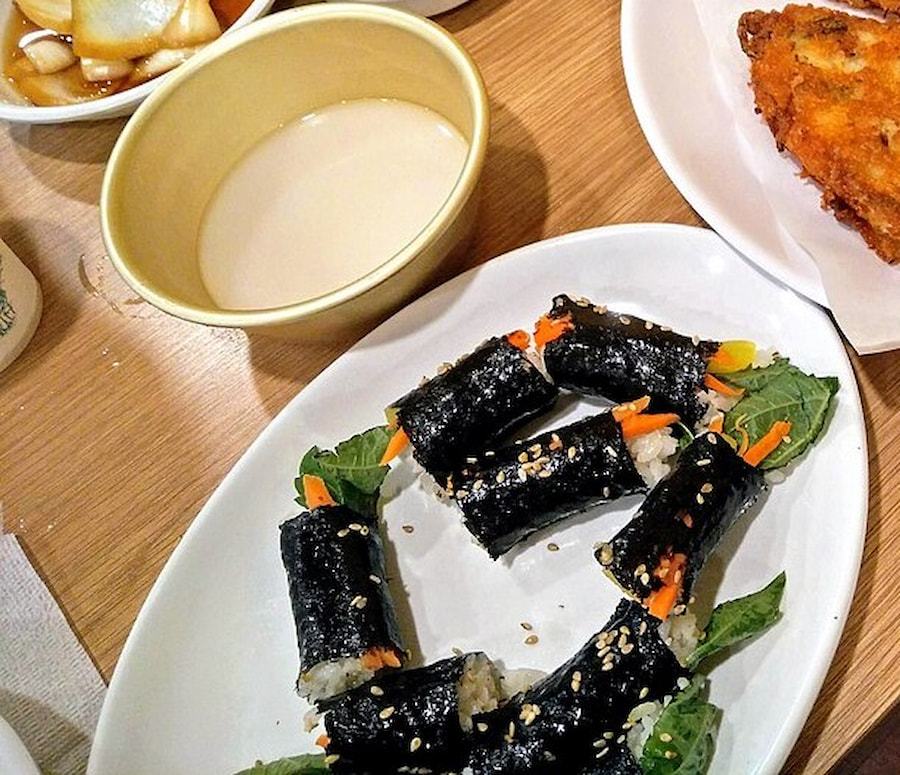

Mayak gimbap is a small, simple rice roll wrapped in seaweed. Common fillings include carrot, spinach, and pickled radish. The name is a playful expression suggesting that the rolls are hard to stop eating; it does not mean that the food contains drugs.
- Typical price: approximately ₩3,000–₩5,000 per serving, depending on the stall and portion
- Minimum order: generally one serving or plate
- How to eat: dip each small roll in the mustard-soy sauce provided. The sharp, tangy sauce gives the mild rice and vegetables more flavor.
Mayak gimbap is an easy snack to share or eat between other dishes.
3. Yukhoe — Korean-Style Raw Beef
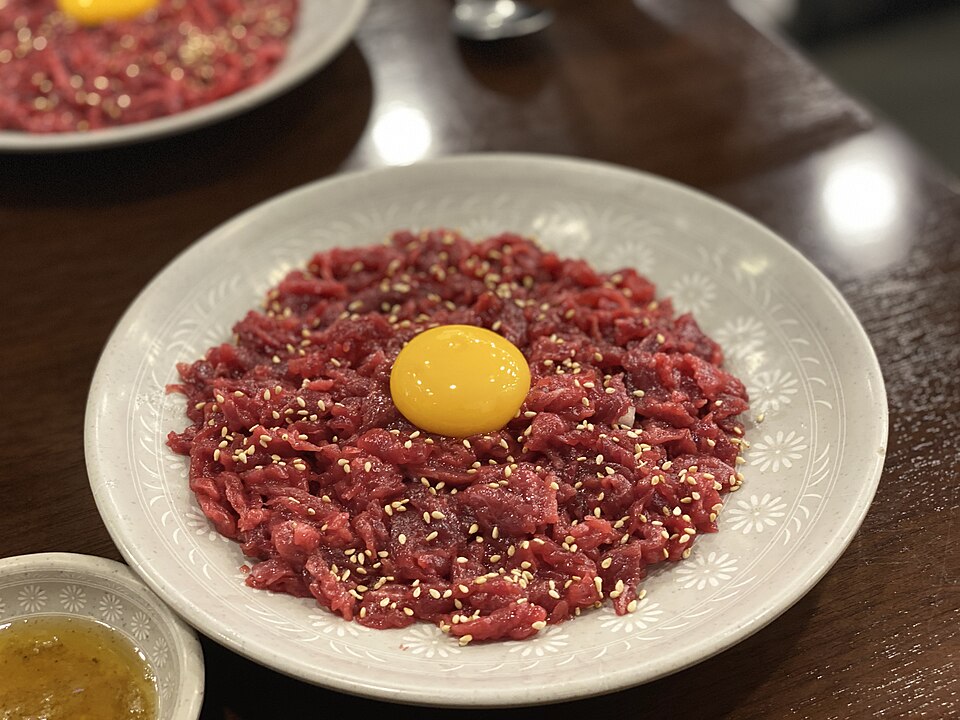

Yukhoe is made with finely sliced or julienned raw beef seasoned with ingredients such as sesame oil, soy sauce, garlic, and pepper. It is commonly served with Korean pear and an egg yolk, although the presentation varies.
- Typical price: around ₩20,000–₩25,000 per plate
- Minimum order: often one plate, usually intended for sharing; restaurant rules and portion sizes vary
- How to eat: mix the egg yolk and seasoning with the beef, then eat it with pear for a sweet, crisp contrast. Some restaurants serve it with rice or offer yukhoe bibimbap as an alternative.
Yukhoe is a raw-meat dish. If you are pregnant, immunocompromised, or otherwise advised to avoid raw meat, choose a cooked dish instead.
Why Gwangjang Market Became a Food Destination
Gwangjang Market opened in 1905 and developed as a permanent market serving Seoul’s everyday shopping needs. Its traditional trade includes fabric, clothing, bedding, and other goods.
The food alley grew into a destination of its own, bringing together vendors and small restaurants serving filling, familiar Korean dishes. The market’s appeal is its lively shared dining atmosphere: people sit close together, order from different stalls, and enjoy a quick meal amid the market’s busy lanes.
Bindaetteok, small gimbap rolls, and yukhoe represent different styles of Korean market food—from hot griddle snacks to convenient bites and a more substantial raw-beef dish.
Getting There: Subway and Bus
For most visitors, Jongno 5-ga Station on Seoul Subway Line 1 is the easiest starting point. The market has several entrances, so the best exit depends on which food area you want to visit.
By subway: Jongno 5-ga Station
- Station: Jongno 5-ga (종로5가역)
- Line: Seoul Subway Line 1
- Exit 7: a convenient approach for the bindaetteok and central food-stall area
- Exit 8: a convenient approach to the market’s main entrance and nearby food alley
- Walking distance: the official Seoul tourism guide lists approximately 62 meters from Exit 8 to the market entrance. Individual stalls are farther inside, so allow extra walking time.
From Exit 8: enter the market from the Jongno 5-ga side and follow the covered market lanes toward the food stalls. Once inside, look for the rows of griddles and small counters selling bindaetteok and gimbap.
From Exit 7: use this approach if you want to start around the pancake stalls. Follow the market entrance signs and continue into the food alley. The exact distance to a particular stall depends on where it is located inside the market.
By subway: Euljiro 4-ga Station
- Station: Euljiro 4-ga (을지로4가역)
- Line: Seoul Subway Lines 2 and 5
- Exit: Exit 4
- Walking time: approximately 5 minutes to the market, depending on the entrance and walking route
From Exit 4, walk toward the Gwangjang Market area along the streets leading to Changgyeonggung-ro (창경궁로). Follow the market signs and enter the covered market. This approach can be useful if you are arriving on Line 2 or Line 5 rather than transferring to Line 1.
By bus
For bus travel, look for stops around Jongno 5-ga (종로5가) or Gwangjang Market (광장시장) and choose a route that stops on the side of the street serving your direction.
- From a Jongno 5-ga stop: walk toward the market entrances along Jongno and follow the signs for Gwangjang Market.
- From a Gwangjang Market stop: enter through the nearest market entrance and follow the covered lanes to the food alley.
Bus route numbers and stop locations can change, and the best stop depends on your starting point. Check a live Seoul transit app before boarding; do not rely on a route number without confirming its current direction and stop.
Travel tip: If you are visiting specifically for food, Jongno 5-ga Station Exit 8 is a straightforward starting point. The market is covered, but it is busy and the food stalls are spread through several lanes. Allow time to walk inside and check prices and portion sizes before ordering.
Check current food-stall opening hours and prices before visiting. The food alley and the market’s non-food shops may have different operating hours.